Oral Semaglutide Positions as First Oral GLP-1 Receptor Agonist for Pediatric Type 2 Diabetes
Novo Nordisk has revealed encouraging topline findings from PIONEER TEENS, a Phase III clinical trial assessing oral semaglutide in children and adolescents aged 10 to 17 years with type 2 diabetes. The trial showed a greater reduction in HbA1c compared to the placebo. The safety profile was found to be consistent with results from earlier semaglutide studies involving adults.
In children, type 2 diabetes is a serious and worsening health issue. This illness involves a considerably greater risk of early death in adult life. According to statistics, this metabolic disorder currently affects millions of adolescents. Experts anticipate a significant rise in these figures by 2030, exacerbating the public health burden.
Current medical guidelines advise the use of metformin and insulin for young patients with diabetes. However, in many adolescents, metformin often does not succeed in maintaining glycemic control. Insulin often leads to weight gain and raises the risk of hypoglycemia. As a result, healthcare providers encounter considerable restrictions in their management of this particular patient group.
Oral semaglutide is already approved for use in adult patients under established brand names. The PIONEER TEENS trial is the inaugural assessment of an oral GLP-1 therapy for children. This research is based on the demonstrated effectiveness of the medication among older individuals. This trial thus tackles an essential deficiency in research concerning pediatric endocrinology.
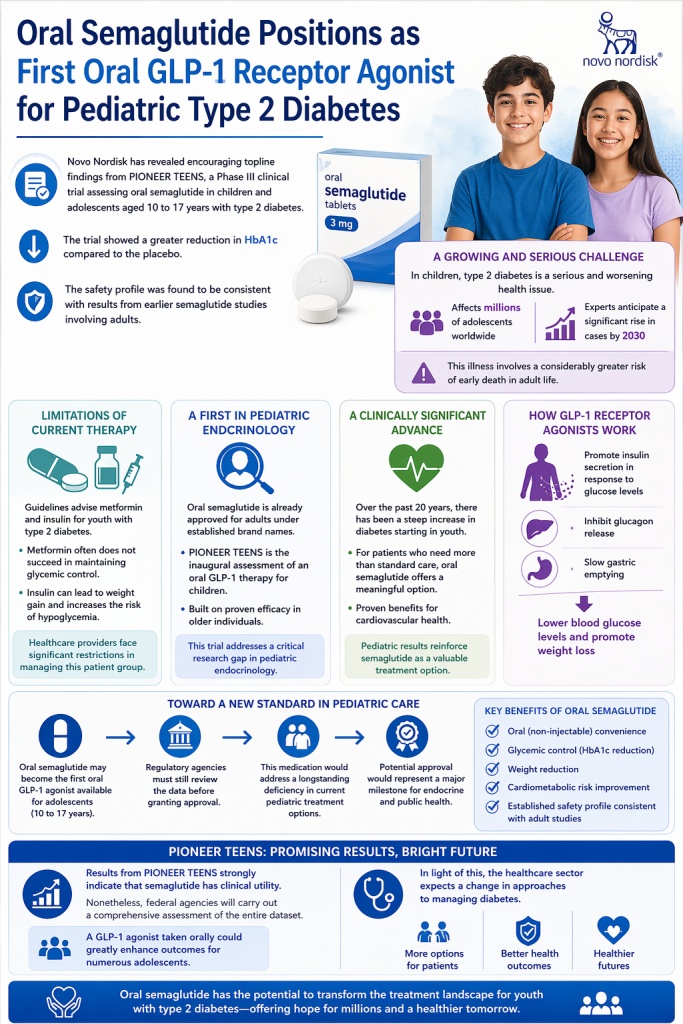
Over the past 20 years, there has been a steep increase in the incidence of diabetes starting in youth. For patients who need more than standard care, oral semaglutide provides a clinically significant option. Experts in the field stress that the medication offers proven advantages for cardiovascular health as well. The pediatric outcomes corroborate the drug’s status as a successful treatment option.
GLP-1 receptor agonists work by promoting insulin secretion in response to glucose levels. These medications also inhibit the release of glucagon and reduce the speed of gastric emptying. These mechanisms together lower blood glucose levels and encourage weight loss. In light of this, the pharmacological properties are of great importance for children with cardiometabolic risks.
Oral semaglutide may become the first oral GLP-1 agonist available for this age group. Regulatory agencies must still review the data before granting formal approval. This medication would address a longstanding deficiency in current pediatric treatment options. Accordingly, the potential approval represents a major milestone for endocrine health.
The results from PIONEER TEENS strongly indicate that semaglutide has clinical utility. Nonetheless, federal agencies will carry out a comprehensive assessment of the entire dataset. A GLP-1 agonist taken orally could greatly enhance outcomes for numerous adolescents. In light of this, the healthcare sector expects a change in approaches to managing diabetes.