Semaglutide Market Size, Growth, and Forecast 2026–2027

Semaglutide is currently changing how doctors treat heart and metabolic health. This drug started as a simple treatment for type 2 diabetes. It now helps people manage weight and lowers the risk of heart attacks. This shift shows a new focus on treating the whole body rather than just blood sugar.
Because of these changes, the business side of this drug has grown very fast. Experts are now looking closely at how much these treatments cost and help. The move into different areas of health has altered the entire pharmaceutical market. Many professionals now see this drug as a major leader in medical growth.
Building on this, analysts have noted a sharp rise in clinical interest. Doctors are prescribing these medications more frequently for complex metabolic issues. This trend reflects a broader move toward preventive medicine in modern healthcare. Consequently, the commercial value of these therapies continues to climb significantly.
Market Valuation and Near Term Growth Projections
The market for this drug reached a value of over $27 billion in 2025. Experts believe this number will climb to nearly $32 billion by 2026. By the year 2031, the total value could reach $58.72 billion. This represents a steady and strong climb in spending every single year.
Other research groups suggest the market might be even larger than those first estimates. Some believe the total value will hit $39 billion by next year. High rates of obesity and diabetes are the main reasons for this fast growth. While numbers vary, every study shows the same upward trend for the future.
Most experts agree that double-digit growth will continue through at least 2027. More people are learning about these treatments and asking their doctors for help. Patients want drugs that truly work for their specific metabolic health needs. This demand keeps the market strong and encourages more investment from companies.
Segmentation by Brand, Formulation, and Indication
Three main versions of this drug now help different groups of patients. Ozempic is the most common shot used for managing type 2 diabetes. Wegovy is a higher-dose shot specifically for weight loss and heart health. Rybelsus offers a pill version that is growing very quickly in popularity.
In light of this, each brand has its own specific rules for how it should be prescribed. However, some doctors still use these drugs for various needs beyond the official labels. These habits make it a bit harder to track exactly how each drug is used. Medical professionals continue to update their methods as they see new patient results.
Injectable versions made up most of the market share during the last year. Even so, the pill version is expected to grow much faster in the future. Many patients simply prefer taking a pill instead of giving themselves a shot. Success for the pill depends on it working just as well as the injection.
Moreover, data shows that patients often stick with the weekly shot more consistently. These injectable pens are very easy to use in a normal daily routine. Daily pills sometimes see lower follow-through from patients over a long period of time. Insurance companies look at these facts when deciding which drugs to cover.
Diabetes treatments still bring in the largest portion of the total money earned. At the same time, heart related uses for the drug are growing quite steadily. The weight loss category is expected to be the fastest-growing part of the market. This is happening because more insurance plans are starting to pay for it.
Accordingly, the number of people who could benefit from these drugs is truly massive. Many millions of people currently live with either diabetes or chronic weight issues. These high numbers show why there is such a huge demand for better medicine. Future growth depends on reaching these patients and making the drug more available.
Regulatory Milestones and their Market Implications
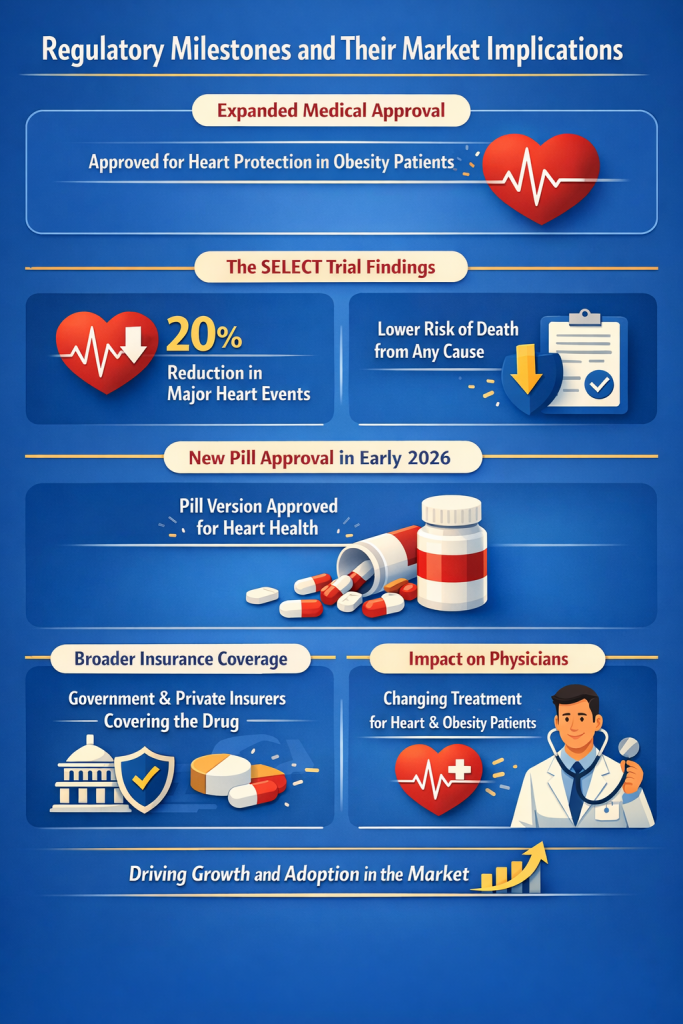
The history of how this drug was approved is very important for the industry. A federal agency recently gave the green light for a new heart protection use. This means doctors can now treat adults who have both heart disease and obesity. This decision changed how heart specialists think about treating their patients every day.
The approval was based on a very large study called the SELECT trial. That study proved the drug reduces the risk of major heart problems by 20%. People in the study also had a lower chance of dying from any cause. These findings have made the drug a trusted tool for many different doctors.
In early 2026, the pill version also received new approvals for heart health. This move gave more evidence that the pill is a strong medical option. It proved that the medicine does much more than just control blood sugar. As a result, both government and private insurance are covering the drug more.
Competitive Landscape and Emerging Pressures
One main company still holds the top spot for these three popular brands. However, new competition from other similar drugs is starting to move in fast. These rivals are gaining ground by using different ways to target the body’s metabolism. This means staying on top will require steady supply and fair pricing.
Given this, a major challenge is coming up as certain legal protections begin to expire. Between 2026 and 2032, other companies will be allowed to make cheaper versions. This usually leads to lower prices across the entire market for everyone. To stay ahead, the original makers must find new ways to improve.
The way people get their medicine is also changing quite a bit lately. While most sales still happen at hospital pharmacies, online options are growing fast. More people like the convenience of getting their prescriptions through the mail. This trend matches the general rise in using video calls to see doctors.
Conclusion
The market for this drug is at a crossroads for several medical fields. Research has moved these treatments from simple extras to essential heart medicines. The growth expected through 2027 shows that doctors really trust these new therapies. This path looks very bright even as new competitors enter the scene.
Nevertheless, there are hurdles regarding high costs and making sure everyone gets access. Future legal changes and new drugs will eventually change the business side again. Success in the coming years depends on how insurance and research work together. Leaders must watch these trends closely to see where the market goes next.
References
Lincoff, A. M., Brown-Frandsen, K., Colhoun, H. M., Frandsen, J., Kastelein, J. J. P., Kahn, S. E., Nicholls, S. J., Olshansky, B., Rubin, J., Schwartz, G. G., & Tardif, J. C. (2023). Semaglutide and cardiovascular outcomes in obesity without diabetes. New England Journal of Medicine, 389(24), 2221–2232. https://doi.org/10.1056/NEJMoa2307563
U.S. Food and Drug Administration. (2024, March 8). FDA approves first treatment to reduce risk of serious heart problems specifically in adults with obesity or overweight. https://www.fda.gov/news-events/press-announcements/fda-approves-first-treatment-reduce-risk-serious-heart-problems-specifically-adults-obesity-or
Mordor Intelligence. (2026). Semaglutide market: Size, share, and forecast 2026–2031. https://www.mordorintelligence.com/industry-reports/semaglutide-market
Fortune Business Insights. (2026). Semaglutide market size, share, and industry forecast 2026–2034. https://www.fortunebusinessinsights.com/semaglutide-market-115771