Beyond the Needle: Why GLP-1 Pills for Type 2 Diabetes Are the 2026 Game-Changer
Medical science is moving at a breakneck pace. For years, the “Ozempic Era” dominated the headlines with weekly injections. However, a major barrier remained for many: needle fatigue. Many patients simply dislike shots. This fear often leads to skipped doses or delayed treatment. Fortunately, the landscape has shifted toward oral options. As we move through 2026, GLP-1 pills for type 2 diabetes are becoming the preferred choice for millions. These tablets offer metabolic power without the daily or weekly sting.
The End of Injection Anxiety
Injection fatigue is a documented medical hurdle. Doctors call it “clinical inertia” when patients avoid life-saving meds due to delivery methods. Oral formulations have quietly evolved to solve this. We are no longer limited to low-dose tablets. Instead, we have high-potency options that rival the famous “weight loss pens.”
Consequently, healthcare providers are rethinking their approach. The goal is simple: make treatment easier to follow. Transitioning to GLP-1 pills for type 2 diabetes provides flexibility for travelers. It also helps patients who lack reliable refrigeration for their medication pens. Essentially, these pills are democratising access to advanced metabolic health.
The Science of the “Acid Bath”
The human stomach is a harsh environment. It functions like an acid bath designed to destroy proteins. Most GLP-1 drugs are peptides, which are small proteins. Therefore, your stomach usually digests them before they can work. To beat this, scientists developed “SNAC” technology.
This co-formulation acts as a protective shield. It locally neutralises stomach acid so the drug can enter the bloodstream. Once absorbed, it mimics a natural hormone. It slows down digestion and tells your brain you are full. Your liver also produces less sugar. This multi-pronged attack is why GLP-1 pills for type 2 diabetes are so effective at lowering A1C levels.
The High-Dose Breakthrough
For a long time, the only oral option was Rybelsus. In doses of 7mg or 14mg, it worked well for blood sugar. However, the weight loss was often modest. Everything changed with the OASIS-1 clinical trial. Researchers tested a 50mg daily oral dose of semaglutide.
The results were transformative. Patients on the 50mg pill lost roughly 15% of their body weight. This matches the results of high-dose Wegovy injections. As of 2026, these high-dose options are rolling out. Doctors now have a needle-free tool for both diabetes and obesity. Nevertheless, higher doses require careful titration. Starting with a low dose helps the body adjust to the medication.
Next-Generation “Non-Peptide” Pills
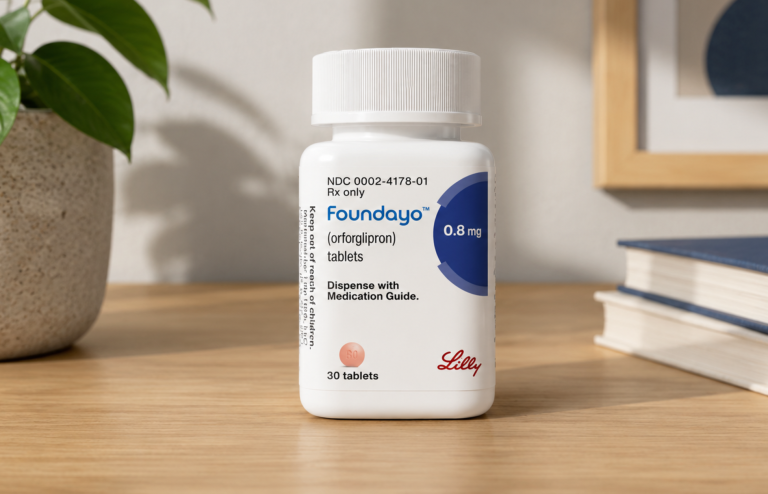
The drug pipeline is full of even newer innovations. One name to watch is Orforglipron. This drug is a “non-peptide” agonist. It is a chemical molecule, not a protein. This distinction is vital for patient convenience.
Because it is not a protein, the stomach does not try to digest it. According to research published in the NEJM, this could remove strict dosing rules. Currently, patients must take Rybelsus on an empty stomach. They must wait 30 minutes before having coffee or food. Orforglipron might eliminate that waiting period. Moreover, it is cheaper to manufacture. This could eventually lead to lower prices for American families.
The “Four-Ounce” Reality Check
Despite the convenience, these pills are not “pop and go” vitamins. They require discipline. Specifically, Rybelsus has very strict rules. You must take it the moment you wake up. You must use exactly four ounces of plain water. Afterward, you must wait at least 30 minutes before any food or coffee.
If you ignore these steps, the drug fails. The “SNAC” shield needs a clear stomach to work. Many doctors warn their patients: “If you need coffee the second you wake up, this pill might fail you.” Compliance is the difference between success and wasted money.
Navigating the Insurance Maze
Cost remains a massive challenge for patients. For those with a Type 2 Diabetes diagnosis, coverage is generally good. Most commercial plans and Medicare Part D include these medications. However, you may face a “Prior Authorization” process. Often, insurance requires you to try cheaper drugs like Metformin first.
The situation is harder for weight management. Medicare currently does not cover anti-obesity medications. Commercial plans vary wildly in their benefits. Without coverage, GLP-1 pills for type 2 diabetes can cost $900 per month. Some doctors prescribe them “off-label” for weight loss. In those cases, patients usually pay the full cash price out of pocket.
Safety and Side Effects
No drug is perfect. Most patients experience some gastrointestinal issues. This includes nausea, vomiting, or diarrhea. Usually, these symptoms fade as the body gets used to the drug. However, there are more serious concerns.
These medications carry a “Black Box Warning” regarding thyroid tumors. This is based on animal studies. Therefore, people with a family history of Medullary Thyroid Carcinoma should avoid them. Additionally, patients must watch for signs of pancreatitis. Finally, rapid weight loss can lead to muscle loss. Doctors recommend a high-protein diet and strength training. Keeping your muscles strong is essential as you lose fat.
A Tool for a Healthier Future
The transition to oral medication is a victory for patient choice. We are entering an era where needles are optional. GLP-1 pills for type 2 diabetes offer a path to better health. They help control sugar and reduce waistlines simultaneously.
However, these pills are tools, not magic cures. They work best alongside a healthy diet. Movement and sleep are still the foundations of health. If you are struggling with your A1C, talk to your doctor. A daily pill might be the breakthrough you need. Check your insurance formulary today to see your options.
References
- KFF. (2024). Medicare coverage of Ozempic, Wegovy, and other GLP-1 drugs. https://www.kff.org/medicare/issue-brief/medicare-coverage-of-ozempic-wegovy-and-other-glp-1-drugs/
- Knop, F. K., et al. (2023). Oral semaglutide 50 mg once daily in adults with overweight or obesity (OASIS 1): A randomised, double-blind, placebo-controlled, phase 3 trial. The Lancet. https://www.thelancet.com/journals/lancet/article/PIIS0140-6736(23)01185-1/fulltext
- Mayo Clinic. (2025). GLP-1 agonists: Diabetes drugs and weight loss. https://www.mayoclinic.org/diseases-conditions/type-2-diabetes/in-depth/glp-1-agonists/art-20044012
- Novo Nordisk. (2023). Rybelsus (oral semaglutide) prescribing information. https://www.novo-pi.com/rybelsus.pdf
- Wharton, S., et al. (2023). Daily oral Orforglipron for adults with obesity. The New England Journal of Medicine. https://www.nejm.org/doi/full/10.1056/NEJMoa2302392