GLP-1 Receptor Agonists: Expanding Indications, Persistent Barriers, and Emerging Evidence

GLP-1 receptor agonists have gone through a major clinical shift over the past twenty years. Initially, doctors used these agents only for managing type 2 diabetes. Today, researchers see their potential in a wider range of metabolic and inflammatory conditions. As a result, the approved drug class now includes more than a dozen unique formulations.
The main way these drugs work is by directly stimulating central GLP-1 receptors. This effectively boosts insulin secretion, lowers glucagon release, and decreases appetite. Because of this, doctors have noticed meaningful weight loss in patients using these agents. They now often prescribe these medications for long-term obesity management.
In addition, off-label use has increased for conditions involving systemic inflammation. Some patients report feeling better before seeing significant weight loss. This suggests that there are pathways at work beyond just metabolic regulation. However, strong clinical evidence for non-metabolic uses is still quite limited.
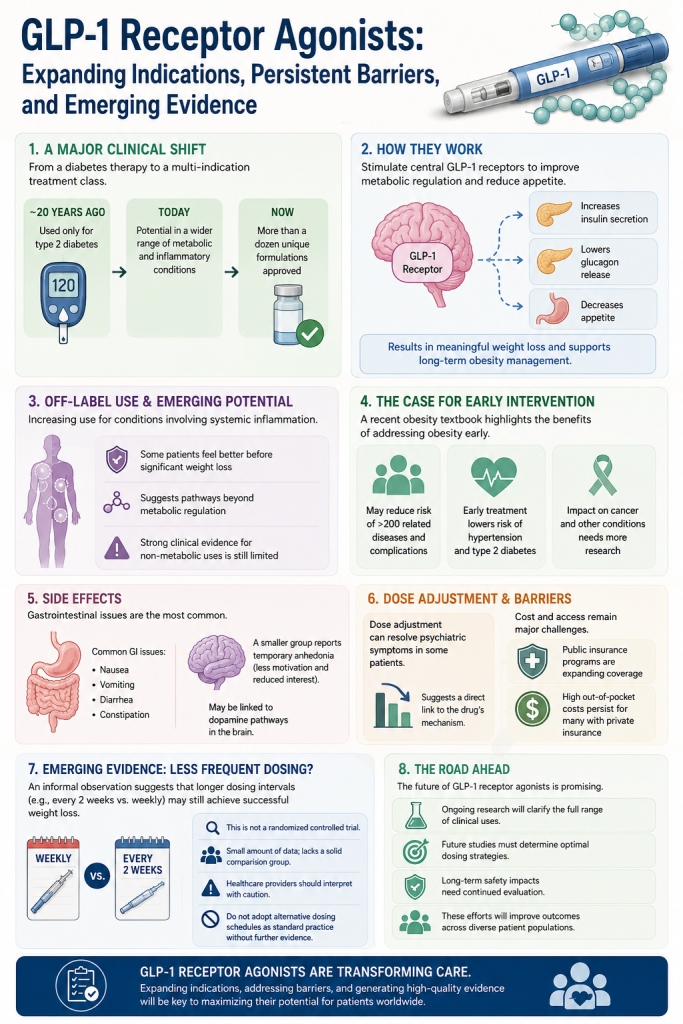
A recent textbook on obesity causes notes the benefits of early medical intervention. Addressing obesity could potentially reduce more than 200 related diseases and complications. For example, early treatment lessens the chances of developing hypertension and type 2 diabetes. However, understanding the exact impact on conditions like cancer needs more research.
Gastrointestinal issues are the most common side effects reported by patients. Additionally, a smaller group has experienced temporary anhedonia, which includes less motivation and reduced interest in daily activities. Doctors think this may be linked to possible effects on dopamine in the brain.
Importantly, adjusting the dose has helped some patients resolve these psychiatric symptoms. This suggests a direct link in how the drug works. Still, cost and access pose serious challenges for many. National public health insurance programs are currently broadening coverage for these drugs.
Unfortunately, many patients with private insurance continue to face high out-of-pocket costs. As a result, some researchers are looking into whether less frequent dosing can maintain therapeutic benefits. One informal observation suggests that longer dosing intervals, such as giving the medication every two weeks instead of weekly, still achieved successful weight loss.
This observation is not a randomized controlled trial. Additionally, the small amount of data lacks a solid comparison group. Healthcare providers should interpret these findings very carefully. Doctors should not use different dosing schedules as standard practice without further proof.
The future of this drug class looks very promising for treatment options. Ongoing research will eventually clarify the full range of clinical uses. Future studies also need to determine the best dosing strategies and long-term safety impacts. In the end, these efforts will help improve patient outcomes across various populations.