Facial Temple Volume Loss and GLP-1 Therapy

Plastic surgeons across the U.S. are seeing a sudden jump in patients looking to fix sunken temples, which are the flat areas on the sides of your forehead. Doctors say this trend is directly linked to the rapid weight loss caused by popular GLP-1 medications like Ozempic, Wegovy, and Mounjaro.
While drugs like Ozempic and Mounjaro were originally made to help adults manage type 2 diabetes, Wegovy is approved specifically for long-term weight management. Because these prescription drugs mimic a natural hormone that curbs your appetite and slows down digestion, people end up eating less and shedding weight quickly.
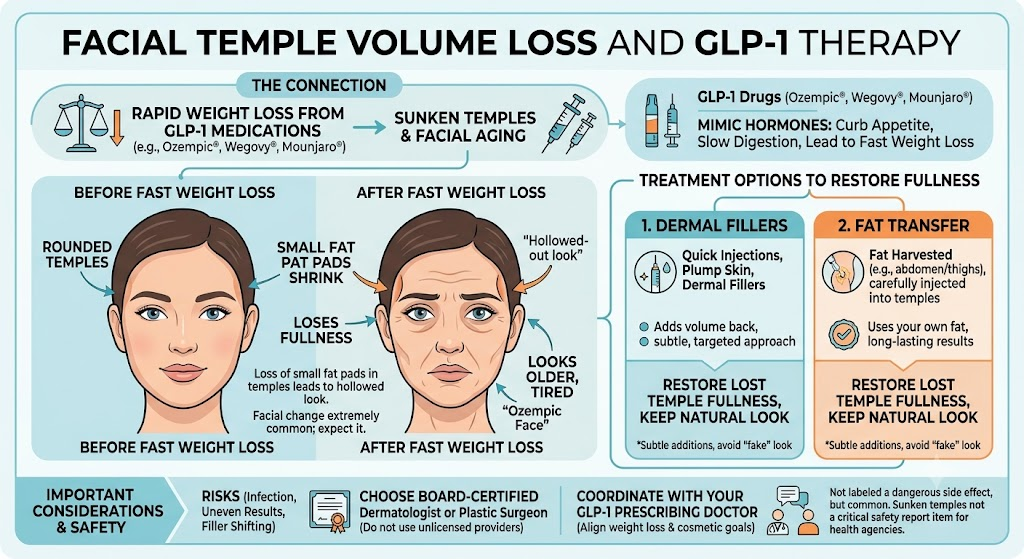
When you lose weight fast on these medications, you lose fat from all over your body, including your face. Most people do not spend much time thinking about their temples, but small fat pads in that area actually play a huge role in keeping your face looking round and youthful. As those fat pads shrink, the temples begin to look hollowed out. Plastic surgeons often refer to this sunken look as “Ozempic face,” and even a small loss of fullness around the temples can make someone look significantly older, tired, or drained.
To restore that lost fullness, surgeons typically rely on two main options: dermal fillers, which are quick injections designed to plump the skin back up, or a fat transfer, which involves taking a small amount of fat from another part of the body and carefully injecting it into the temples. Surgeons usually prefer a subtle, targeted approach to keep the face looking natural, as adding too much volume can end up looking fake.
Like any cosmetic procedure, fixing sunken temples comes with standard risks such as infection, uneven results, or the filler shifting out of place. If you are considering these fixes, it is best to work with a board-certified dermatologist or plastic surgeon rather than an unlicensed provider. It is also a good idea to talk with the doctor who prescribes your GLP-1 medication so your weight management and cosmetic goals stay safely coordinated. While health agencies do not label sunken temples as a dangerous side effect requiring formal reporting, doctors say it is an extremely common outcome, and anyone starting a GLP-1 medication should simply expect some facial changes along the way.