8 Common GLP-1 Sexual Side Effects Explained

GLP-1 receptor agonists have changed weight management and blood sugar control for millions of patients. Most clinical focus tends to be on gastrointestinal effects, injection site reactions, and metabolic outcomes. However, changes in sexual health happen often and are not talked about enough in regular care. Understanding these changes helps both patients and clinicians address them directly.
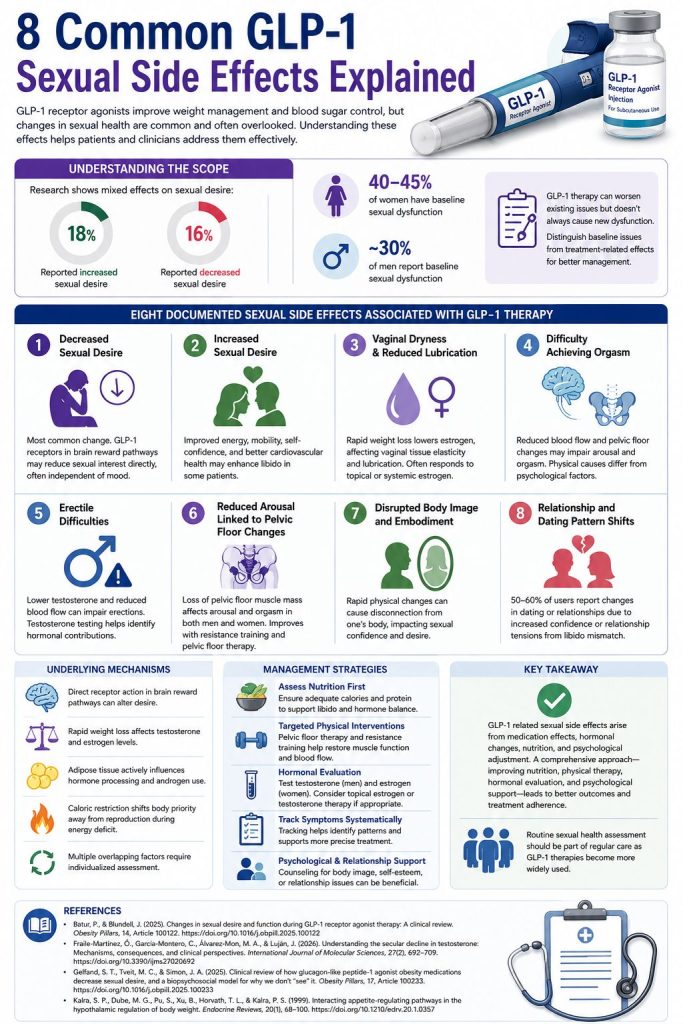
Understanding the scope of sexual health changes during GLP-1 therapy
Research on GLP-1 medications and sexual function shows a complex situation. An institutional survey found that 18 percent of users reported increased sexual desire. Meanwhile, 16 percent reported decreased desire. This almost even split challenges the idea that these medications always lower sexual interest.
A different clinical review found a 34 percent decrease in sexual desire compared to baseline. This suggests that significant groups of patients experience notable changes. Sexual dysfunction often exists before starting GLP-1 treatment in individuals with obesity. Research shows that about 40 to 45 percent of women experience baseline dysfunction.
Additionally, around 30 percent of men report sexual dysfunction before beginning therapy. Therefore, GLP-1 treatment does not always create new dysfunction. Instead, it can worsen existing hormonal or vascular issues. Given this, it is important to tell apart baseline dysfunction from treatment-related effects.
Eight Documented Sexual Side Effects Associated with GLP-1 Therapy
Decreased Sexual Desire
Reduced libido is the most common sexual change reported by GLP-1 users. GLP-1 receptors are found in brain areas that control reward and motivation. They do more than just regulate appetite. So, the same brain pathways that reduce food cravings may also lessen sexual interest.
This effect often seems unrelated to mood changes in many patients. Thus, evidence suggests a direct receptor-based mechanism.
Increased Sexual Desire
A smaller group of patients report an increase in sexual desire during treatment. Better energy levels, improved mobility, and higher self-confidence likely play a role in this response. Additionally, reduced inflammation and better cardiovascular health may help enhance sexual response. This surprising finding highlights the different effects of GLP-1 medications across various patients.
Vaginal Dryness and Reduced Lubrication
Rapid weight loss changes estrogen levels in the body. Adipose tissue significantly contributes to estrogen production. Lower estrogen levels impact the elasticity and lubrication of vaginal tissue. This change is hormonal rather than psychological.
The issue usually responds to specific interventions rather than just behavioral counseling. Clinicians should consider using topical or systemic estrogen therapy when suitable.
Difficulty Achieving Orgasm
Vasoconstriction lowers blood flow to genital tissue. This can hinder arousal and orgasm. Some GLP-1 medications may cause mild vascular effects that worsen the issue. Additionally, loss of pelvic floor muscles during quick weight loss disrupts nerve and muscle coordination.
These physical changes are different from psychological or relationship causes of anorgasmia. Therefore, a focused physical assessment is often necessary.
Erectile Difficulties
Men who lose weight rapidly may have lower testosterone levels. Adipose tissue actively affects how the body processes and uses androgens. Decreased testosterone directly harms erectile function, regardless of vascular health. In this context, reduced blood flow from vasoconstriction can add to erectile problems.
Testing testosterone levels should be considered for men who report new erectile dysfunction. This can help separate hormonal issues from other effects of treatment.
Reduced Arousal Linked to Pelvic Floor Changes
Rapid weight loss often leads to uneven loss of pelvic floor muscle mass. This reduction in muscle affects the physical processes involved in arousal and orgasm. Both male and female patients may feel this issue. However, this mechanism can respond well to targeted physical treatments.
Effective strategies include resistance training and pelvic floor physical therapy. Treating muscle issues separately from hormonal issues improves treatment accuracy.
Disrupted Body Image and Embodiment
Quick changes in physical appearance can lead to feeling unfamiliar with one’s own body. This phenomenon is different from libido itself. A disrupted sense of embodiment can impact sexual confidence and alter desire, even if hormonal and vascular function are normal.
Patients adjusting to significant changes in their bodies might need time to re-evaluate their self-image. So, psychological support focused on body image may be very helpful. This type of therapy often works better than medication in these situations.
Relationship and Dating Pattern Shifts
Survey data shows that 50 to 60 percent of users experience changes in dating behavior. These changes can range from increased social confidence to relationship tensions. Tensions often arise from mismatched libido between partners. In fact, weight loss can change relationship dynamics, even without any physiological factors involved.
Clinicians should take the relational context into account when assessing reported sexual side effects. This wider perspective can improve the effectiveness of patient counseling.
Underlying Mechanisms Driving these Changes
Several overlapping mechanisms help explain the sexual effects linked to GLP-1 therapy. Direct receptor action in brain areas related to reward can lead to changes in desire. Rapid weight loss also affects testosterone and estrogen levels. Adipose tissue plays an active role in hormone processing.
Caloric restriction can also shift the body’s priorities away from reproductive health. This often happens during periods where energy intake is low. Close clinical attention to nutritional status is important. Not getting enough calories signals a state of scarcity.
In this state, the body prioritizes essential functions. Sexual function is not essential for survival. As a result, it may decline in situations resembling starvation. This mechanism is different from direct pharmacological effects and can respond to changes in diet.
Management Strategies for GLP-1 Related Sexual Side Effects
Clinicians should assess caloric intake before blaming sexual side effects solely on medication. Ensuring enough protein and overall calories can help improve desire. Evaluating nutrition is a simple, valuable first step in management. It helps avoid unnecessary discontinuation of medication.
Targeted physical interventions tackle the tissue-level issues directly. Pelvic floor physical therapy can restore muscle function affected by rapid weight loss. Resistance training can help maintain muscle mass during the weight loss process. These methods provide solutions aimed at the underlying causes, not just the symptoms.
Hormonal evaluations should come next when nutritional and muscular issues are not enough. Testing testosterone in men and estrogen in women can identify deficiencies. Topical estrogen therapy may relieve vaginal dryness without systemic hormone replacement. At the same time, testosterone supplements can help with erectile issues due to lower androgen levels.
Systematic tracking of symptoms can improve conversations about sexual side effects in clinical settings. Recording when symptoms occur gives clinicians useful information. This method turns vague worries into recognizable patterns that support targeted treatment. Patients who consistently track their symptoms are better prepared to advocate for proper evaluation.
Conclusion
Sexual side effects during GLP-1 therapy come from several factors. These include direct medication effects, hormonal changes, nutritional status, and psychological adjustment. These mechanisms often overlap, so precise attribution is crucial for effective management. Improving nutrition, targeted physical therapy, and hormonal evaluation each address different factors.
As GLP-1 medications are used more widely, regular assessment becomes increasingly important. Including sexual health assessment in routine care will enhance patient outcomes and treatment adherence.
References
Batur, P., & Blundell, J. (2025). Changes in sexual desire and function during GLP-1 receptor agonist therapy: A clinical review. Obesity Pillars, 14, Article 100122. https://doi.org/10.1016/j.obpill.2025.100122
Fraile-Martínez, Ó., García-Montero, C., Álvarez-Mon, M. A., & Luján, J. (2026). Understanding the secular decline in testosterone: Mechanisms, consequences, and clinical perspectives. International Journal of Molecular Sciences, 27(2), 692–709. https://doi.org/10.3390/ijms27020692
Gelfand, S. T., Tveit, M. C., & Simon, J. A. (2025). Clinical review of how glucagon-like peptide-1 agonist obesity medications decrease sexual desire, and a biopsychosocial model for why we don’t “see” it. Obesity Pillars, 17, Article 100233. https://doi.org/10.1016/j.obpill.2025.100233
Kalra, S. P., Dube, M. G., Pu, S., Xu, B., Horvath, T. L., & Kalra, P. S. (1999). Interacting appetite-regulating pathways in the hypothalamic regulation of body weight. Endocrine Reviews, 20(1), 68–100. https://doi.org/10.1210/edrv.20.1.0357