Understanding Dose Strength Differences Between Foundayo and Zepbound
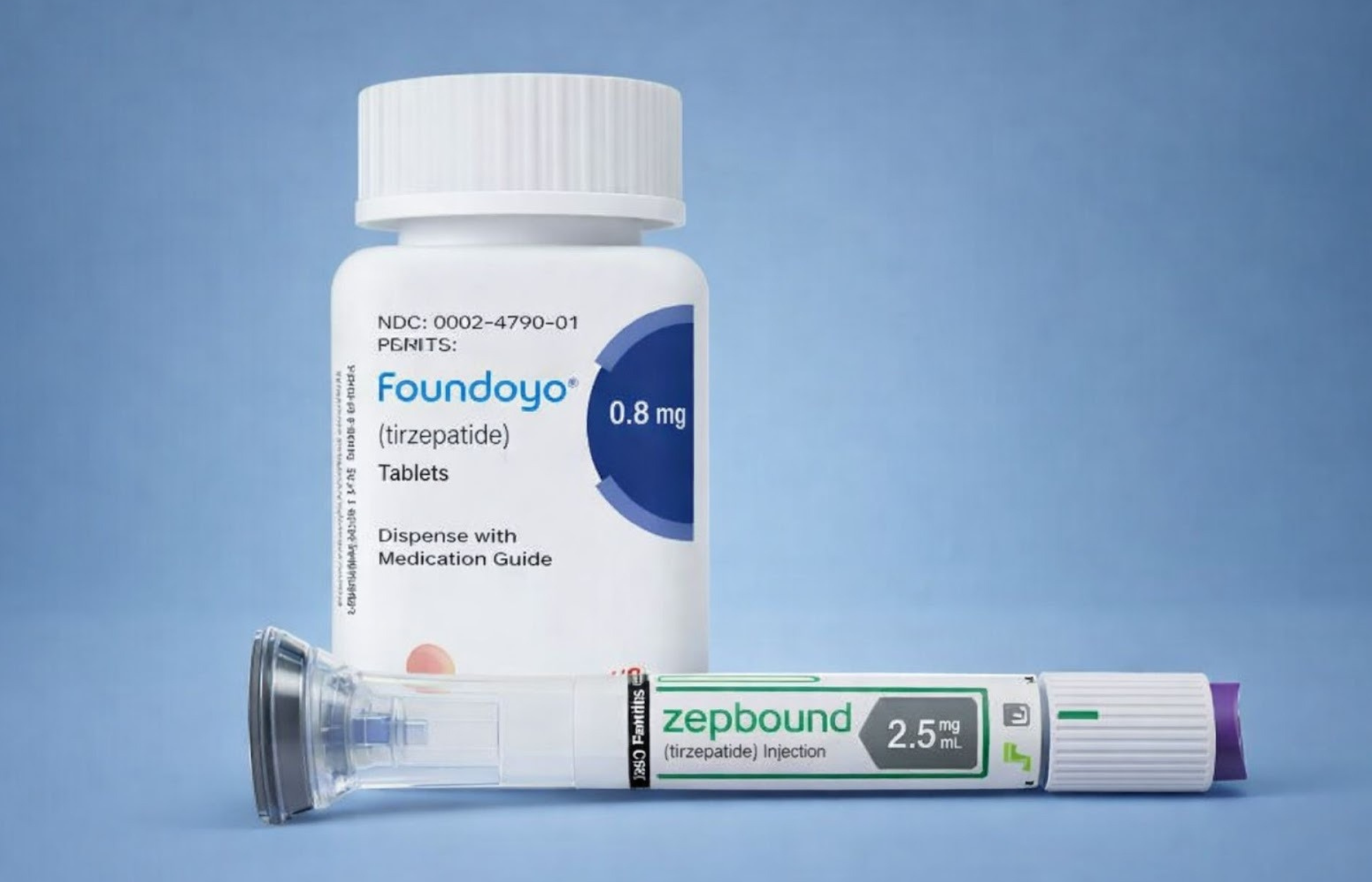
The federal approval of Foundayo on April 1, 2026, marks a major change in obesity care. This medication is the first daily pill that uses a non-peptide structure to help with weight. Along with this, Zepbound remains a powerful option that uses a weekly injection. Both products come from the same company but work in very different ways.
Molecular Class and Mechanism of Action
Foundayo uses a small molecule to trigger weight loss signals in the body. Because it is not a protein, stomach acid does not break it down. This allows the medicine to be absorbed easily without needing a specific meal schedule. To be precise, patients can take it any time of day.
Zepbound works differently by targeting two separate hunger pathways at once. This dual action helps the body release more insulin and burn fat faster. As a result, it often leads to higher weight loss numbers in clinical trials. Understanding these two paths helps doctors choose the right strength for each person.
Foundayo undergoes primary metabolism through the hepatic CYP3A4 enzymatic pathway. This specific chemical process requires careful management of other medications the patient may take. In light of this, doctors must monitor for potential drug interactions during the treatment period. Furthermore, the oral route depends heavily on the health of the gastrointestinal lining for success.
Foundayo Dose Strengths and Titration Schedule
Foundayo tablets come in six different strengths to help the body adjust slowly. Doctors start patients on a very low 0.8 mg dose to prevent stomach issues. Furthermore, patients stay on each level for at least thirty days. This slow move up the ladder ensures the body handles the medicine well.
The six steps for this pill are smaller than the steps for the injection. This is because a daily pill creates more frequent peaks in the bloodstream. Notably, many people in studies reported feeling some nausea during the early weeks. Therefore, moving slowly through the strengths is the best way to stay on track.
Patient adherence remains a critical factor for the success of daily oral therapy. Missing a dose can cause a more rapid drop in blood levels than with weekly injections. Along with this, the 17.2 mg ceiling dose provides a steady therapeutic effect for most users. Consequently, the daily routine helps maintain consistent receptor activation over a long duration.
Zepbound Dose Strengths and Titration Schedule
Zepbound is an injection available in six strengths from 2.5 mg to 15 mg. Each dose comes in a simple, single-use pen for easy home use. Clinicians start everyone at the 2.5 mg level for the first month. Given this, the first dose is mostly to get the body ready.
The dose goes up by 2.5 mg every four weeks if the patient feels okay. The highest dose allowed for weight loss is 15 mg once per week. Along with this, some pens are designed to hold multiple doses for more flexibility. This variety helps make sure that every patient gets exactly what they need.
The injection creates a large reservoir of medicine under the skin. This depot slowly releases the peptide into the blood over several days. Thus, the drug maintains a steady presence even toward the end of the week. Building on this, the weekly schedule simplifies life for many patients who travel often.
Comparative Dose Strength Architecture
The way these two drugs are dosed depends on how long they stay active. Foundayo is taken every day because it leaves the system relatively quickly. Meanwhile, Zepbound is taken once a week because it lasts much longer. This difference means the milligram numbers on the boxes are not the same.
Comparing the milligrams of a pill to an injection can be very confusing. They use different chemical structures and enter the blood through different paths. Thus, a higher number on a pill does not mean it is stronger. Doctors look at how the drug hits the targets rather than just the number.
Bioavailability also plays a massive role in setting these different dose levels. Only a small fraction of an oral dose actually reaches the general circulation. In view of this, the pill requires a different milligram count than a direct injection. Accordingly, clinical comparisons must focus on weight loss results rather than numeric strength.
Efficacy Outcomes Stratified by Dose in Clinical Trials
Weight loss results usually go up as the dose of the medicine increases. In major studies, the 5 mg dose of Zepbound helped people lose 15 percent. The highest 15 mg dose helped people lose over 21 percent of their weight. Hence, the strongest Zepbound dose is currently the top performer for weight loss.
Foundayo also shows great results that improve as the dose gets higher. People taking the 17.2 mg pill lost about 12.4 percent of their body weight. In light of this, more than half of the users reached a 10 percent goal. It also helped improve heart health and lower blood pressure in many patients.
The data from the ATTAIN trial program highlights the benefits of the highest dose. Patients reaching the 17.2 mg level saw the most significant changes in metabolic health. Moreover, waist circumference and blood sugar levels improved alongside the weight reduction. As a result, the highest dose provides the most comprehensive benefit for metabolic syndrome.
Side Effect Profile Relative to Dose Escalation
Both drugs can cause stomach issues like nausea, diarrhea, or basic constipation. These problems usually happen right after a patient moves to a higher dose. For Foundayo, these symptoms might happen a bit more often because of the daily pill. Nevertheless, most of these issues go away after the body gets used to it.
Both medications have a warning about a rare type of thyroid tumor. This is a standard warning for all drugs in this specific medical class. Consequently, people with a family history of thyroid cancer should not use them. Doctors check these risks before writing the first prescription for any patient.
Clinical Indications and Patient Selection by Dose
Zepbound is for adults with obesity or those with weight-related health problems. Foundayo is approved for the exact same group of people who need help. Notably, Zepbound is also approved to help people who struggle with sleep apnea. This makes it a great choice for those with multiple health concerns.
Choosing between a pill and a shot depends on a person’s daily life. Some people prefer the ease of a pill they can take without water. Others like the convenience of only needing a shot once every week. Thus, the final choice usually comes down to personal comfort and health goals.
Conclusion
Foundayo and Zepbound are both excellent tools for managing weight in the modern age. Their different dose levels allow doctors to customize treatment for every single patient. Foundayo offers the ease of a daily pill with a very steady climb. In contrast, Zepbound offers a weekly shot with a focus on maximum results.
Clinical data shows that Zepbound is the stronger option for total weight loss. It targets two receptors to help people lose more than 20 percent of their weight. However, Foundayo is a great oral choice for those who dislike needles or travel often. Understanding these differences helps patients make the best choice for their long-term health.
References
Jastreboff, A. M., Aronne, L. J., Ahmad, N. N., Wharton, S., Connery, L., Alves, B., Kiyosue, A., Zhang, S., Liu, B., Bunck, M. C., & Stefanski, A. (2022). Tirzepatide once weekly for the treatment of obesity. New England Journal of Medicine, 387(3), 205–216. https://doi.org/10.1056/NEJMoa2206038
Jastreboff, A. M., le Roux, C. W., Stefanski, A., Aronne, L. J., Halpern, B., Wharton, S., Wilding, J. P. H., Perreault, L., Zhang, S., Battula, R., Bunck, M. C., Ahmad, N. N., & Jouravskaya, I. (2025). Tirzepatide for obesity treatment and diabetes prevention. New England Journal of Medicine, 392(10), 958–971. https://doi.org/10.1056/NEJMoa2410819
Wharton, S., Aronne, L. J., Stefanski, A., Connery, L., Blevins, T., Ahmad, N. N., Liu, B., Bunck, M. C., & Stefanski, A. (2025). Orforglipron, an oral small-molecule GLP-1 receptor agonist for obesity treatment (ATTAIN-1). New England Journal of Medicine, 393, 1796–1806. https://doi.org/10.1056/NEJMoa2511774
Horn, D. B., Ryan, D. H., Giljanovic Kis, S., Alves, B., Mu, Y., Kim, S. G., Aberle, J., Bain, S. C., Allen, S., Sarker, E., Wu, Q., Stefanski, A., & Jouravskaya, I. (2025). Orforglipron, an oral small-molecule GLP-1 receptor agonist, for the treatment of obesity in people with type 2 diabetes (ATTAIN-2): A phase 3, double-blind, randomised, multicentre, placebo-controlled trial. The Lancet, 406, 2927–2944. https://doi.org/10.1016/S0140-6736(25)02165-8
Frias, J. P., Hsia, S., Eyde, S., Liu, R., Ma, X., Konig, M., Kazda, C., Mather, K. J., Haupt, A., Pratt, E., & Robins, D. (2023). Efficacy and safety of oral orforglipron in patients with type 2 diabetes: A multicentre, randomised, dose-response, phase 2 study. The Lancet, 402(10400), 472–483. https://doi.org/10.1016/S0140-6736(23)01302-8
Wharton, S., Blevins, T., Connery, L., Rosenstock, J., Raha, S., Liu, R., Ma, X., Mather, K. J., Pratt, E., Robins, D., & Haupt, A. (2023). Daily oral GLP-1 receptor agonist orforglipron for adults with obesity. New England Journal of Medicine, 389, 877–888. https://doi.org/10.1056/NEJMoa2302392