Rybelsus vs. Ozempic

If you have been looking into diabetes treatments or weight management lately, you have almost certainly heard the name Ozempic. It is everywhere. But then there is Rybelsus, which often comes up in the same conversation. It can get confusing because, chemically speaking, they are actually the same drug, semaglutide. The difference isn’t what is inside them; it is how you get them into your body.
Choosing between them usually isn’t about which one is “medically better” in a lab. It is about which one fits into your actual, messy daily life. Here is a practical breakdown of how they compare, without the textbook jargon.
It’s the Same Engine Under the Hood
Before we get into the pros and cons, it helps to know what these drugs are actually doing. Both Rybelsus and Ozempic belong to a class of drugs called GLP-1 receptor agonists. That is a mouthful, but basically, they mimic a hormone your body naturally makes when you eat.
When you take either of them, a few things happen: your body gets better at releasing insulin when you need it, your stomach empties more slowly (so you feel full longer), and your brain gets a signal that says, “Hey, we’re good on food for now.” That is why they are effective for both type 2 diabetes and weight.
The Big Difference: The Shot vs. The Routine
This is where the road splits. The biggest deciding factor for most people isn’t the chemistry; it is the delivery method.
Ozempic is a weekly injection. I know, nobody loves needles. But the pen used for Ozempic uses a tiny, hair-thin needle. Most people I’ve talked to say they barely feel it; it’s nothing like getting a flu shot. The huge advantage here is the “set it and forget it” factor. You take it once a week, maybe on a Sunday night, and the medication hangs around in your system doing its job for seven days. You don’t have to think about it every morning.
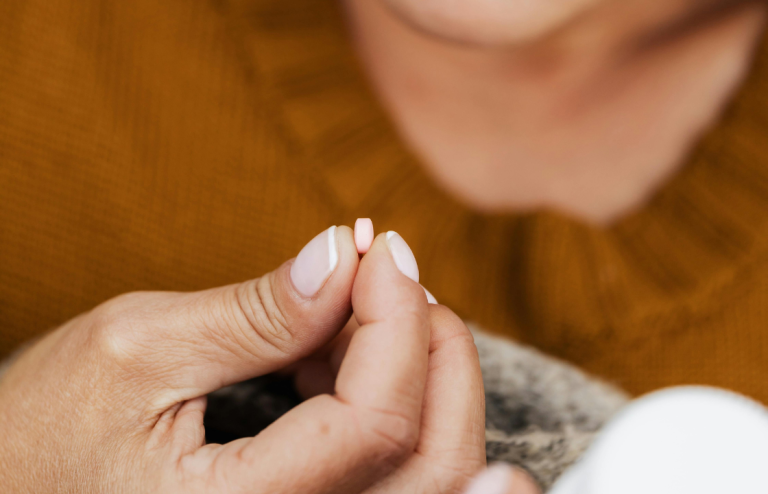
Rybelsus is a daily pill. On paper, a pill sounds way easier than a shot. But Rybelsus comes with some strict rules because our stomachs are really good at destroying medication before it gets absorbed.
- You have to take it the second you wake up.
- You can only have a tiny sip of water (no more than 4 ounces).
- You must wait at least 30 minutes before you eat, drink coffee, or take other meds.
If you are the type of person who needs coffee immediately to function or rushes out the door in the morning, the pill might actually be more annoying than the shot. That 30-minute wait can feel like an eternity when you’re waking up.
Does One Work Better?
Because Ozempic is injected, it bypasses your stomach and goes straight into your system. It is very efficient. You can also get it in higher doses than the pill version. In head-to-head studies, the injectable version usually edges out the pill slightly when it comes to lowering blood sugar and weight loss, mainly because you can push the dose higher.
Rybelsus still works incredibly well, though. The highest dose (14mg) puts up numbers that are very comparable to the lower and medium doses of Ozempic. For many people, it is more than enough to get their A1C down and see some real changes on the scale.
Let’s Talk About the Nausea
There is no sugarcoating this part: both of these drugs can make you feel sick, especially at the start. It’s practically the “price of admission” for GLP-1s.
Nausea is the most common complaint. For most people, it hits when they first start or when they bump up their dose, and then it fades away after a few weeks as their body adjusts. Because Ozempic stays in your system at a steady level all week, the nausea can sometimes feel like a low-grade background hum. With Rybelsus, because you take it daily, some people find the stomach issues fluctuate a bit more day-to-day.
The best advice? Start slow. Doctors will usually start you on a “starter dose” for a month just to get your body used to it before ramping up to the therapeutic dose. Don’t try to be a hero and rush the process.
The Heart of the Matter
One of the best things about Ozempic (and likely Rybelsus, though the data is still catching up) is that it’s good for your heart.
A major study showed that Ozempic significantly reduced the risk of heart attack and stroke in people with diabetes who were at high risk. That is a big deal. Rybelsus has shown it is safe for the heart, but we don’t have the same level of slam-dunk evidence for reducing heart events just yet. If you have a history of heart issues, your doctor might lean toward the injectable for this reason.
Conclusion
Here is the painful part. Both of these drugs are expensive, often hovering around $900 to $1,000 a month if you are paying cash.
Insurance coverage is complicated. Many plans cover them for type 2 diabetes, but will fight you tooth and nail if you want them just for weight loss. And often, insurers have a preference. They might cover Ozempic but not Rybelsus, or vice versa. It’s always worth checking your specific plan’s “formulary” (the list of covered drugs) before getting your heart set on one.
References
Davies, M., Pieber, T. R., Hartoft-Nielsen, M. L., Hansen, O. K., Jabbour, S., & Rosenstock, J. (2017). Effect of oral semaglutide compared with placebo and subcutaneous semaglutide on glycemic control in patients with type 2 diabetes: A randomized clinical trial. JAMA, 318(15), 1460-1470. https://doi.org/10.1001/jama.2017.14752
Marso, S. P., Bain, S. C., Consoli, A., Eliaschewitz, F. G., Jódar, E., Leiter, L. A., Lingvay, I., Rosenstock, J., Seufert, J., Warren, M. L., Woo, V., Hansen, O., Holst, A. G., Pettersson, J., & Vilsbøll, T. (2016). Semaglutide and cardiovascular outcomes in patients with type 2 diabetes. New England Journal of Medicine, 375(19), 1834-1844. https://doi.org/10.1056/NEJMoa1607141
Wilding, J. P., Batterham, R. L., Calanna, S., Davies, M., Van Gaal, L. F., Lingvay, I., McGowan, B. M., Rosenstock, J., Tran, M. T., Wadden, T. A., Wharton, S., Yokote, K., Zeuthen, N., & Kushner, R. F. (2021). Once-weekly semaglutide in adults with overweight or obesity. New England Journal of Medicine, 384(11), 989-1002. https://doi.org/10.1056/NEJMoa2032183