Oral Semaglutide & Levothyroxine: Key Facts

Oral semaglutide (often prescribed as Rybelsus) has made a big difference in how we manage weight loss and diabetes. But many people who take it also rely on levothyroxine for an underactive thyroid. If you’re taking both, timing is everything. Understanding how these two drugs interact and keeping a close eye on your thyroid levels as you lose weight helps make sure both medications work safely and effectively.
How to Time Your Doses Correctly
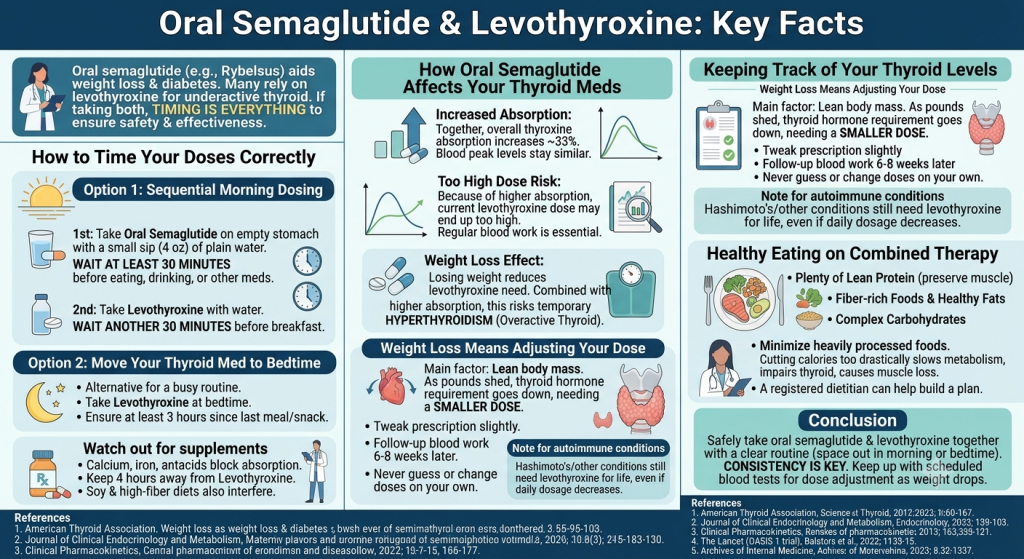
Both oral semaglutide and levothyroxine need to be taken on an empty stomach. If you take them at the exact same time, your body won’t absorb either one properly. To avoid this, doctors usually recommend one of two daily routines.
Sequential Morning Dosing
Take your oral semaglutide first thing in the morning with a small sip (about 4 ounces) of plain water. Wait at least 30 minutes before eating, drinking anything else, or taking other meds. Once that 30-minute window passes, take your levothyroxine with water, then wait another 30 minutes before eating breakfast. It takes a little patience in the morning, but it keeps both doses in the early hours without them clashing.
Move Your Thyroid Med to Bedtime
If waiting around for an hour before breakfast doesn’t fit your daily routine, taking levothyroxine at bedtime is a great alternative. Just make sure it’s been at least 3 hours since your last meal or snack. Studies show that taking levothyroxine at night works just as well as taking it in the morning.
Watch out for supplements: Calcium, iron, and antacids block thyroid medication from absorbing. Keep them at least 4 hours away from your levothyroxine dose. Soy and high-fiber meals can also interfere with absorption, so let your doctor know about your typical diet and any supplements you take.
How Oral Semaglutide Affects Your Thyroid Meds
Oral semaglutide can change how your body processes levothyroxine. In clinical testing, taking both drugs together actually increased overall thyroxine absorption by about 33%, even though peak levels in the blood stayed roughly the same.
Because your body might absorb more of the thyroid hormone than usual, your current levothyroxine dose could end up being too high. That’s why official guidelines recommend getting regular blood work done to track your thyroid function when starting semaglutide.
On top of that, losing weight naturally reduces the amount of levothyroxine your body needs. Combine higher drug absorption with a lower body weight, and you run the risk of temporary hyperthyroidism (an overactive thyroid). Keep an eye out for symptoms like:
- A racing or pounding heart (palpitations)
- Unexplained anxiety or jitteriness
- Trouble sleeping
If you notice these signs, your doctor will order a quick blood test to check your levels.
Keeping Track of Your Thyroid Levels
Normally, doctors check TSH (thyroid-stimulating hormone) every few months. But when you start oral semaglutide, you’ll want to get checked a bit sooner, usually around 6 to 8 weeks after your first dose, and again whenever your semaglutide dose increases.
- A dropping TSH score usually means your body is getting too much thyroid hormone (either from better absorption or weight loss).
- A rising TSH score means you aren’t getting enough.
Your doctor will use these lab results, not just how you feel to adjust your dose. They might also check Free T4 if your symptoms and lab numbers don’t seem to line up. Routine Free T3 testing usually isn’t necessary for basic hypothyroidism.
Weight Loss Means Adjusting Your Dose
The main factor determining your levothyroxine dose is lean body mass. As you shed pounds on semaglutide, your thyroid hormone requirement naturally goes down, meaning you will likely need a smaller dose over time.
Any tweak to your thyroid prescription should be small and verified with follow-up blood work 6 to 8 weeks later. Because levothyroxine stays in your system for a long time, guessing or changing doses on your own can easily throw your body out of whack. Always work with your healthcare provider before changing how much you take.
Note for autoimmune thyroid conditions: If you have Hashimoto’s or another autoimmune condition, losing weight won’t cure the underlying thyroid issue. You’ll still need levothyroxine for life, even if your daily dosage decreases as you lose weight.
Healthy Eating on Combined Therapy
Oral semaglutide works by curbing your appetite, making it much easier to eat less. However, cutting calories too drastically can slow your metabolism and impair thyroid function. Extreme restriction also leads to muscle loss.
Focus on a steady routine of balanced meals that include:
- Plenty of lean protein (to preserve muscle mass)
- Fiber-rich foods and healthy fats
- Complex carbohydrates
Minimizing heavily processed foods helps keep your energy steady while you lose weight. If you’re struggling to hit your nutritional goals while taking an appetite suppressant, a registered dietitian can help you build a realistic eating plan.
Conclusion
You can safely take oral semaglutide and levothyroxine together, but it requires a clear routine. Whether you space them out in the morning or switch your thyroid pill to bedtime, consistency is key. Keep up with your scheduled blood tests so your doctor can tweak your levothyroxine dose as your body changes and your weight drops.
References
American Thyroid Association (ATA) Guidelines on Hypothyroidism: Jonklaas, J., Bianco, A. C., Bauer, A. J., Burman, K. D., Cappola, A. R., Celi, F. S., Cooper, D. S., Kim, B. W., Peeters, R. P., Rosenthal, M. S., & Sawka, A. M. (2014). Guidelines for the treatment of hypothyroidism: Prepared by the American Thyroid Association task force on thyroid hormone replacement. Thyroid, 24(12), 1670–1751. https://doi.org/10.1089/thy.2014.0028
Lean Body Mass & Levothyroxine Dosing Requirements (Journal of Clinical Endocrinology and Metabolism): Santini, F., Pinchera, A., Marsili, A., Ceccarini, G., Castagna, M. G., Valeriano, R., Giannetti, N., Sani, E., Grasso, L., Bencivenni, S., Vitti, P., & Tonacchera, M. (2005). Lean body mass is the major determinant of levothyroxine dosage in male and female patients with hypothyroidism. The Journal of Clinical Endocrinology & Metabolism, 90(1), 124–127. https://doi.org/10.1210/jc.2004-1364
Oral Semaglutide & Levothyroxine Pharmacokinetic Interaction Study (Rybelsus): Hicker, K., Bækdal, T. A., Jensen, L., & Bøje, O. W. (2019). Effect of oral semaglutide on the pharmacokinetics of thyroxine in healthy subjects. Clinical Pharmacokinetics, 58(8), 1081–1090. https://doi.org/10.1007/s40262-019-00753-3
OASIS 4 Clinical Trial (Oral Semaglutide 25 mg for Obesity): Knop, F. K., Aroda, V. R., do Vale, R. D., Holst-Hansen, T., Laursen, P. N., Lingvay, I., & Wharton, S. (2023). Oral semaglutide 50 mg taken once daily in adults with overweight or obesity (OASIS 1): A randomised, double-blind, placebo-controlled, phase 3 trial. The Lancet, 402(10403), 705–719. https://doi.org/10.1016/S0140-6736(23)01185-6
Bedtime Administration of Levothyroxine: Bolk, N., Visser, T. J., Nijman, J., Jongste, I. J., Tijssen, J. G., & Kalsbeek, A. (2010). Effects of evening vs morning levothyroxine intake: A randomized double-blind crossover trial. Archives of Internal Medicine, 170(22), 1996–2003. https://doi.org/10.1001/archinternmed.2010.426