Medicare’s New GLP-1 Bridge Program: Seven Essential Clinical and Coverage Facts
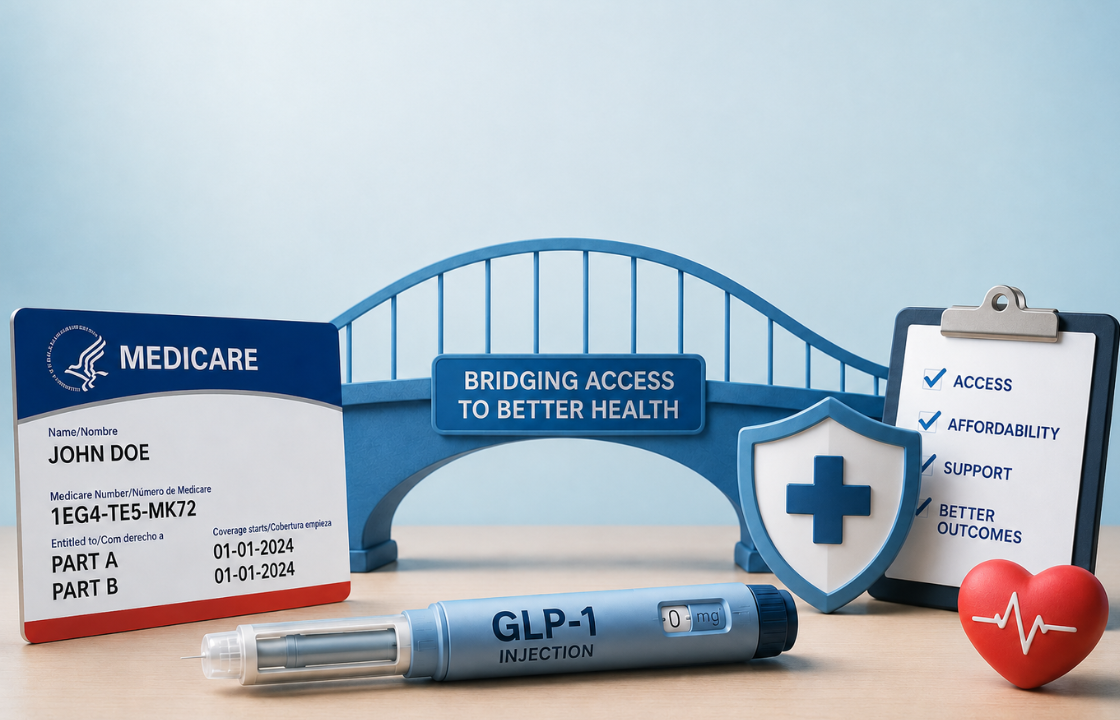
Medicare made a notable policy change on July 1 by extending limited coverage for weight management medications through the new Bridge initiative. For many years, federal law prohibited the agency from covering obesity medications. This shift shows increasing recognition in the medical community that obesity is a chronic disease with a clear biological basis. As a result, doctors who focus on obesity medicine see this as an important step forward, even though there are significant limitations to the program.
Eligibility Criteria Limit Access to Specific Patient Groups
To qualify for the Bridge program, beneficiaries must have Medicare Part D prescription drug coverage obtained independently or through a Medicare Advantage plan. Those who get their prescription benefits through employer or union retirement plans are excluded. Therefore, it is crucial to check plan details with a benefits administrator. Additionally, patients who are already receiving GLP-1 medication coverage through standard benefits cannot access this program.
Type 2 diabetes is the original approved indication for this drug class, which prevents these patients from enrolling. Other approved uses, such as reducing cardiovascular risk or treating obstructive sleep apnea, also exclude eligibility. Body mass index (BMI) thresholds play a role in determining qualification. Individuals with a BMI of 35 or higher automatically qualify for coverage.
Patients with a BMI between 27 and 34.9 may qualify if they have certain health conditions like prediabetes. Those with a BMI between 30 and 34.9 can qualify if they have chronic kidney disease. Hence, prescribers must evaluate patients’ health metrics carefully during the initial assessment.
Enrollment Needs Clinician Attestation Instead of Direct Patient Application
Patients cannot apply to the program on their own. A physician, nurse practitioner, or physician assistant must prescribe an eligible medication and formally confirm the criteria. Prescribers must also verify that pharmacotherapy will go along with lifestyle changes involving diet.
After submitting the prescription, pharmacists must process the authorization through a verification system. Approved patients will receive written confirmation before starting treatment. This administrative process can introduce delays between prescribing and accessing the medication.
Program Costs Are Not Subject to Standard Medicare Drug Spending Limits
Patients enrolled in the Bridge program pay a fixed cost of fifty dollars each month for covered medications. This expense does not fall under the annual prescription drug spending cap that limits out-of-pocket costs. In 2026, this overall cap will be 2,100 dollars. Thus, Bridge payments do not count toward beneficiaries who reach that specific limit.
Coverage Covers Only Three Medications Despite a Wider Available Market
The program includes three specific GLP-1-based therapies from the many incretin mimetics currently on the market. Orforglipron, an oral tablet, showed an eleven percent weight loss over sixteen months in clinical trials. Semaglutide resulted in about fifteen percent weight loss over the same period. Additionally, tirzepatide achieved weight loss ranging from fifteen to twenty percent of body weight.
The program does not cover older weight management medication combinations that are available at lower costs in generic forms. Phentermine-topiramate led to about ten percent weight loss after a year of regular use. Similarly, the combination of bupropion and naltrexone resulted in up to eight percent weight loss. Both of these options remain unavailable through the program, even though they have demonstrated effectiveness.
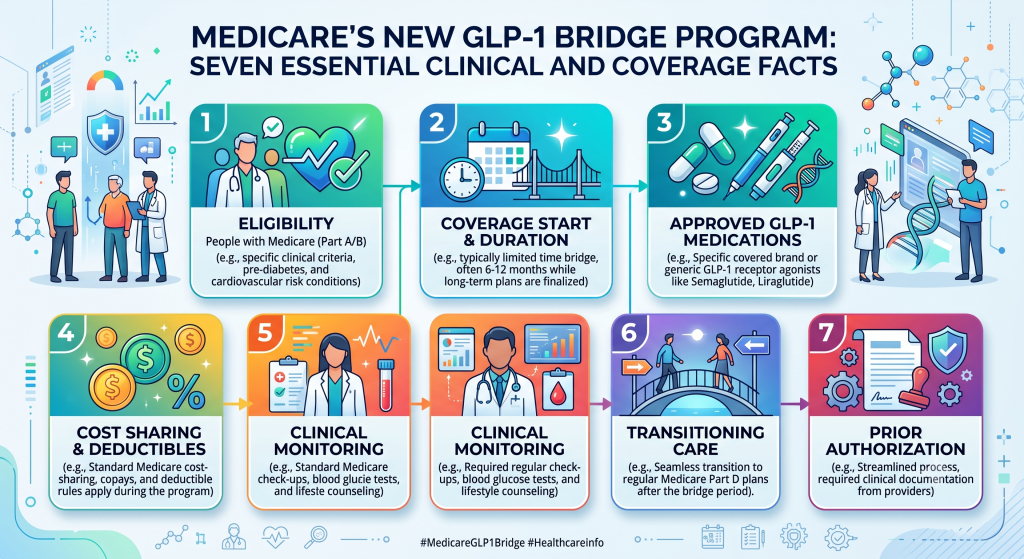
Wraparound Clinical Support Is Optional Rather Than Required
Clinical evidence suggests that patients tend to lose more weight when they receive medication along with structured support from specialists. However, the program does not mandate such additional services beyond the initial lifestyle declaration. Medicare separately covers obesity behavioral therapy sessions for patients with a BMI over 30. Because of this gap, patients must take significant responsibility for finding comprehensive support on their own.
Supply Issues and Side Effects Create Ongoing Challenges
The expected high demand for the program may lead to medication shortages for participants. Unlike patients with other insurance plans, those enrolled have limited options for substitutions due to the narrow medication list. Missing more than two weeks of scheduled doses might mean patients must restart treatment. Therefore, interruptions in supply can have serious clinical implications for this group.
Gastrointestinal side effects like nausea and diarrhea impact at least ten percent of users, often leading them to stop treatment. Patients need to clearly understand monitoring procedures and how to report issues. Additionally, primary care clinics frequently handle a high volume of messages, which can make prompt communication difficult.
Long-Term Treatment Commitment Extends Beyond the Bridge Program Timeline
Clinical studies show that using GLP-1 therapy usually requires a long-term commitment to maintain weight loss results. Stopping the therapy often leads to rapid weight gain for most patients. This reality contrasts with many patients’ views of the therapy as short-term. Clinicians stress the importance of counseling patients about the need for ongoing commitment.
The federal government has proposed a follow-up program named Balance, planned to launch in January 2028. However, this future program currently does not have congressional funding authorized. As a result, there is uncertainty about the continuity of coverage for patients who start treatment now.
Conclusion
The Bridge program marks a significant step in improving access to obesity medications. Nonetheless, it imposes serious limitations through strict eligibility and a narrow selection of medications. Patients and prescribers must navigate these challenges while seeking effective weight management solutions. Future updates to the program may determine whether the federal approach shifts towards broader coverage options.
References
American Psychological Association. (2020). Publication manual of the American Psychological Association (7th ed.). https://doi.org/10.1037/0000165-000
Bays, H. E. (2026). New era in obesity medication access: A commentary. Obesity Pillars, 5, Article 100122. https://pmc.ncbi.nlm.nih.gov/articles/PMC12828794/
Frederiksen, K. (2026). Obesity pillars roundtable: Better together – combined obesity medicine and metabolic surgery care for the treatment of obesity. Obesity Pillars, 5, Article 100118. https://pmc.ncbi.nlm.nih.gov/articles/PMC12689217/
Han, G. Y. (2026). Causal machine learning for comparative effectiveness of GLP-1 RA versus SGLT2i in heart failure using real-world EHR data. medRxiv. Advance online publication. https://doi.org/10.1101/2026.04.06.26350259
Harris, M., Mahdi, S., Fairfield, C., Brown, L., Wadley, M., & Miras, A. D. (2026). Obesity management medications for the surgeon. Frontline Gastroenterology. Advance online publication. https://doi.org/10.1136/flgastro-2025-103307