How GLP-1 Medications Are Changing the Future of Heart Health

GLP-1 medications have gained attention for weight loss, but research now highlights their powerful role in heart health. These medications, originally developed for type 2 diabetes, support cardiovascular health in multiple ways. As obesity, diabetes, and heart disease often overlap, GLP-1 drugs address several risk factors at once. This makes them a promising option for people concerned about long-term heart health.
GLP-1 stands for glucagon-like peptide-1, a hormone the body naturally produces. This hormone helps regulate blood sugar, appetite, and digestion. GLP-1 medications mimic this hormone to improve metabolic function. They slow digestion, reduce hunger, and improve insulin response. These effects lead to weight loss and better blood sugar control, both of which reduce stress on the heart.
Excess weight places strain on the cardiovascular system. It increases blood pressure, raises inflammation, and damages blood vessels over time. By helping people lose weight, GLP-1 medications lower this burden. Reduced inflammation improves blood vessel flexibility and blood flow. Healthier vessels lower the risk of plaque buildup, heart attack, and stroke.
Better blood sugar control also protects the heart. High glucose levels damage arteries and increase the risk of cardiovascular disease. GLP-1 medications stabilize glucose levels and improve insulin sensitivity. This reduces long-term damage to the heart and blood vessels. These benefits occur even before significant weight loss begins.
Large clinical trials show that people taking GLP-1 medications experience fewer major cardiovascular events. These include heart attacks, strokes, and heart-related deaths. Researchers observed these benefits in people with diabetes and in those without it. The protective effects appear to go beyond weight loss alone. Scientists believe GLP-1 drugs may directly improve heart and vascular function.
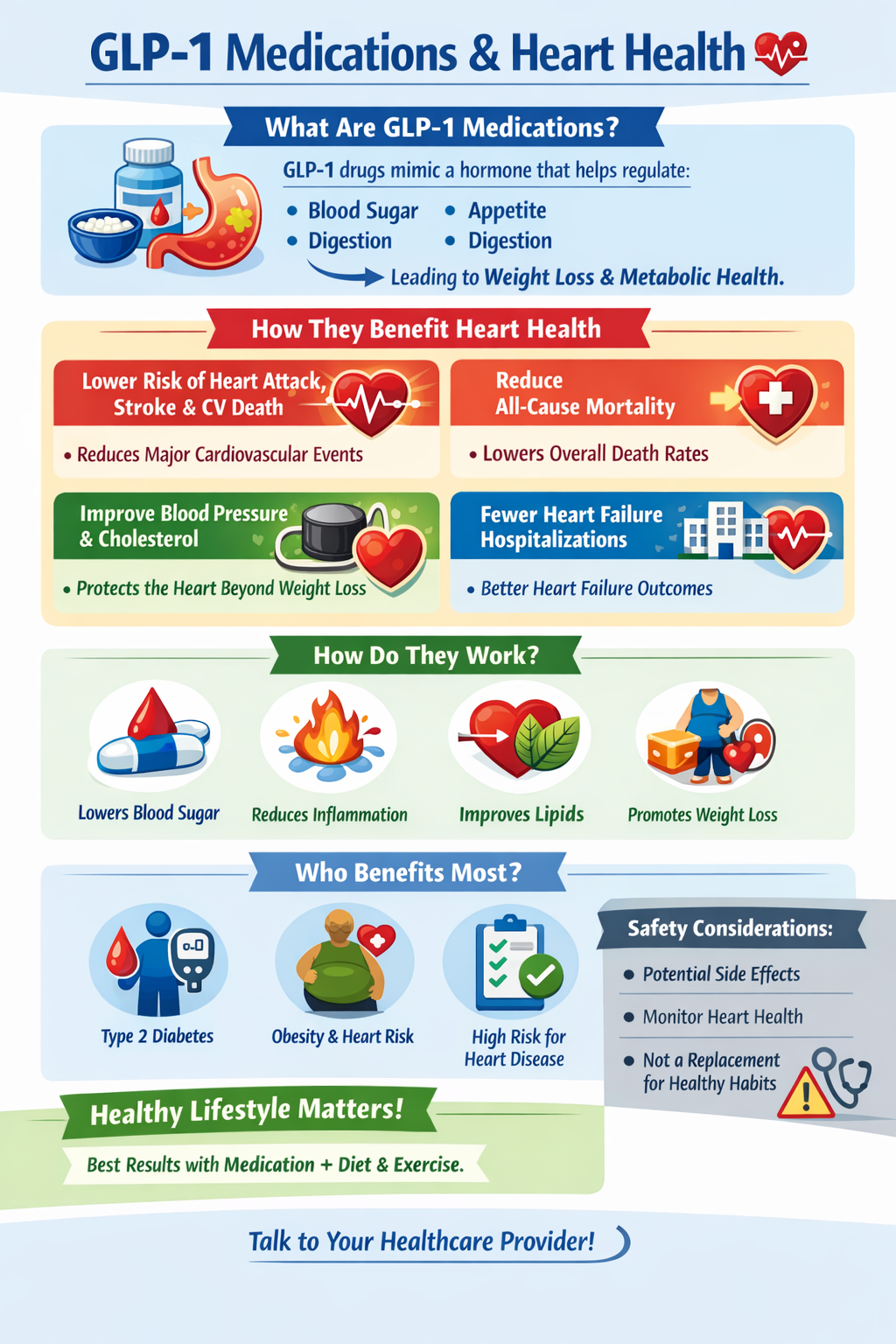
One of the most promising findings involves heart failure. Heart failure occurs when the heart cannot pump blood efficiently. Many treatments offer limited relief, especially for certain heart failure types. Studies now show that GLP-1 medications can reduce hospitalizations and improve symptoms in people with heart failure. Patients often report better exercise tolerance and quality of life.
GLP-1 medications also support healthier cholesterol levels. They tend to lower harmful LDL cholesterol and triglycerides. Improved lipid levels further reduce cardiovascular risk. Combined with lower blood pressure, these changes create a strong protective effect for the heart.
Safety remains an important concern with any medication. From a cardiovascular perspective, GLP-1 drugs have shown a strong safety profile. Researchers have not found increased risks of heart rhythm problems or heart damage. Most side effects are seen to affect the digestive system. Nausea, bloating, or diarrhea may occur, especially during early treatment. Doctors often manage these effects by adjusting the dose slowly, depending on how the patient is reacting.
Experts stress that GLP-1 medications work best alongside healthy lifestyle habits. Regular physical activity strengthens the heart and improves circulation. A balanced diet supports weight management and metabolic health. Sleep and stress management also play a role in cardiovascular protection. Medication alone cannot replace these habits, but it can enhance their benefits.
Another important factor involves long-term use. Heart benefits appear to continue as long as treatment continues. Stopping the medication may reduce these effects over time. For this reason, doctors evaluate each patient’s risks, goals, and ability to stay on treatment. Ongoing research continues to explore optimal duration and dosing.
The future of GLP-1 medications in heart care looks promising. Researchers are studying their use in people without diabetes or obesity. Early data suggests potential benefits for broader populations at cardiovascular risk. As evidence grows, these medications may become a standard part of heart disease prevention strategies.
GLP-1 medications represent a shift in how doctors approach cardiovascular health. Instead of treating risk factors separately, these drugs address weight, metabolism, and inflammation together. This comprehensive approach offers meaningful protection for the heart. For many patients, GLP-1 therapy may help reduce serious cardiovascular events and improve long-term outcomes.
References
Dang, L. E., Fong, E., Tarp, J. M., Clemmensen, K. K. B., Ravn, H., Kvist, K., Buse, J. B., van der Laan, M., & Petersen, M. (2023). A causal roadmap for hybrid randomized and real-world data designs: Case study of semaglutide and cardiovascular outcomes. arXiv. https://arxiv.org/abs/2305.07647
Efficacy of GLP-1 receptor agonist-based therapies on cardiovascular events and cardiometabolic parameters in obese individuals without diabetes: A meta-analysis of randomized controlled trials. (2025). Journal of Diabetes. https://pubmed.ncbi.nlm.nih.gov/40207414/
Glucagon-like peptide-1 (GLP-1) receptor agonists and cardiovascular events in patients with type 2 diabetes mellitus: A meta-analysis of double-blind, randomized, placebo-controlled clinical trials. (2022). PubMed. https://pubmed.ncbi.nlm.nih.gov/35546664/
GLP-1 receptor agonists and cardiovascular disease: A meta-analysis of recent cardiac outcome trials. (2018). PubMed. https://pubmed.ncbi.nlm.nih.gov/29445896/
GLP-1 receptor agonists in heart failure. (2025). Biomolecules, 15(10), 1403. https://doi.org/10.3390/biom15101403
Cardiovascular benefits of glucagon-like peptide-1 (GLP-1) receptor agonists. (n.d.). PubMed. https://pubmed.ncbi.nlm.nih.gov/40539787/
Cardiovascular benefits of GLP-1 receptor agonists in type 2 diabetes mellitus with atherosclerotic cardiovascular disease: A systematic review of randomized controlled trials. (n.d.). PubMed. https://pubmed.ncbi.nlm.nih.gov/40918811/
GLP-1 RAs and cardiovascular and kidney outcomes by body mass index in type 2 diabetes. (n.d.). JAMA Network Open. https://jamanetwork.com/journals/jamanetworkopen/fullarticle/2838602