Global Alignment Could Expand GLP-1 Access

Generic drugs delivered extraordinary savings over the past three decades. Federal agencies approved copies of brand name small molecule drugs with expired patents. These affordable alternatives collectively saved trillions of dollars for millions of patients. In light of this, a newer class of medicines presents far greater manufacturing complexity.
Biologics represent large protein based molecules produced in living cells. Manufacturers cannot produce near equivalent counterparts as identical copies. Consequently, biosimilars do not qualify for streamlined generic approval pathways. This structural distinction carries significant cost implications for treatments targeting chronic diseases.
A new study examined biosimilar regulations across nineteen diverse jurisdictions. The analysis found substantial divergence in approval standards and substitution policies. Researchers noted that biologics account for just five percent of prescriptions. Along with this, these medicines represent more than half of all drug spending.
Many regulatory systems lack the infrastructure to evaluate biosimilars efficiently. Most regulatory agencies employed similar definitional language at the outset. However, their specific approval criteria diverged considerably during implementation. Building on this, some regulators accepted laboratory data as sufficient for approval.
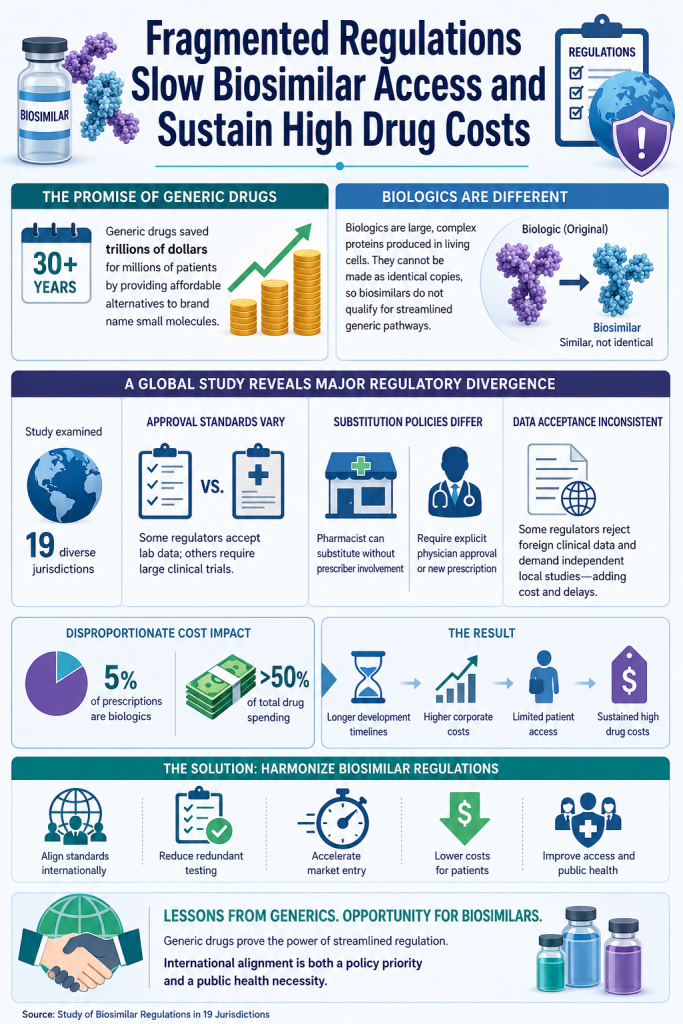
Other agencies required extensive clinical trials in large patient populations. These regulatory differences substantially increase development timelines and corporate costs. Substitution practices also varied equally across the studied jurisdictions. Certain frameworks authorize pharmacists to dispense biosimilars without additional prescriber involvement.
Other systems require explicit physician approval or entirely new prescriptions. This high variability creates severe access barriers at the point of dispensing. Furthermore, some regulatory bodies refuse to accept clinical data generated under foreign authorities. These agencies mandate independent local studies, duplicating effort and expense.
Harmonizing biosimilar approval standards internationally would reduce redundant testing. This alignment would accelerate market entry and lower costs for patients. Generic drugs demonstrate the power of streamlined regulatory processes. Therefore, international alignment represents both a policy priority and a public health necessity.