Can GLP-1 Medications Treat Lipedema? What Current Evidence Shows
GLP-1 medications (like Ozempic, Wegovy, and Zepbound) have completely changed how we treat weight and metabolic health. Naturally, doctors and patients are now asking: Can these same drugs help people with lipedema?
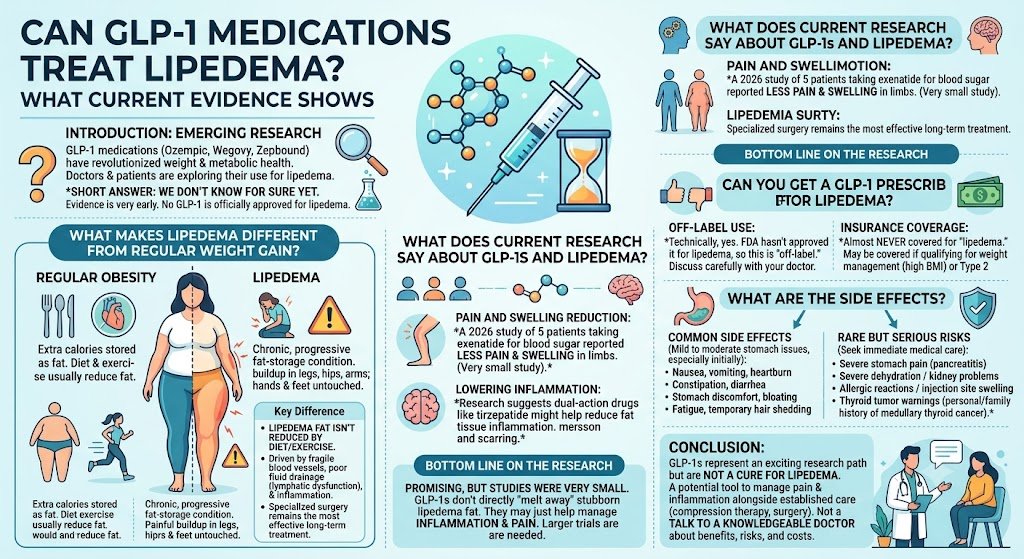
The short answer is: We don’t know for sure yet. Right now, scientific evidence is very early, and no GLP-1 drug is official or approved by regulators for treating lipedema.
Here is a simple breakdown of what lipedema is, what the latest research shows, and what you should know about using GLP-1s for this condition.
What Makes Lipedema Different From Regular Weight Gain?
To understand why treating lipedema is so tricky, it helps to know how it differs from general obesity:
- Regular Obesity: Standard weight gain happens when the body stores extra calories as fat. Eating a balanced diet and exercising regularly usually helps reduce this fat.
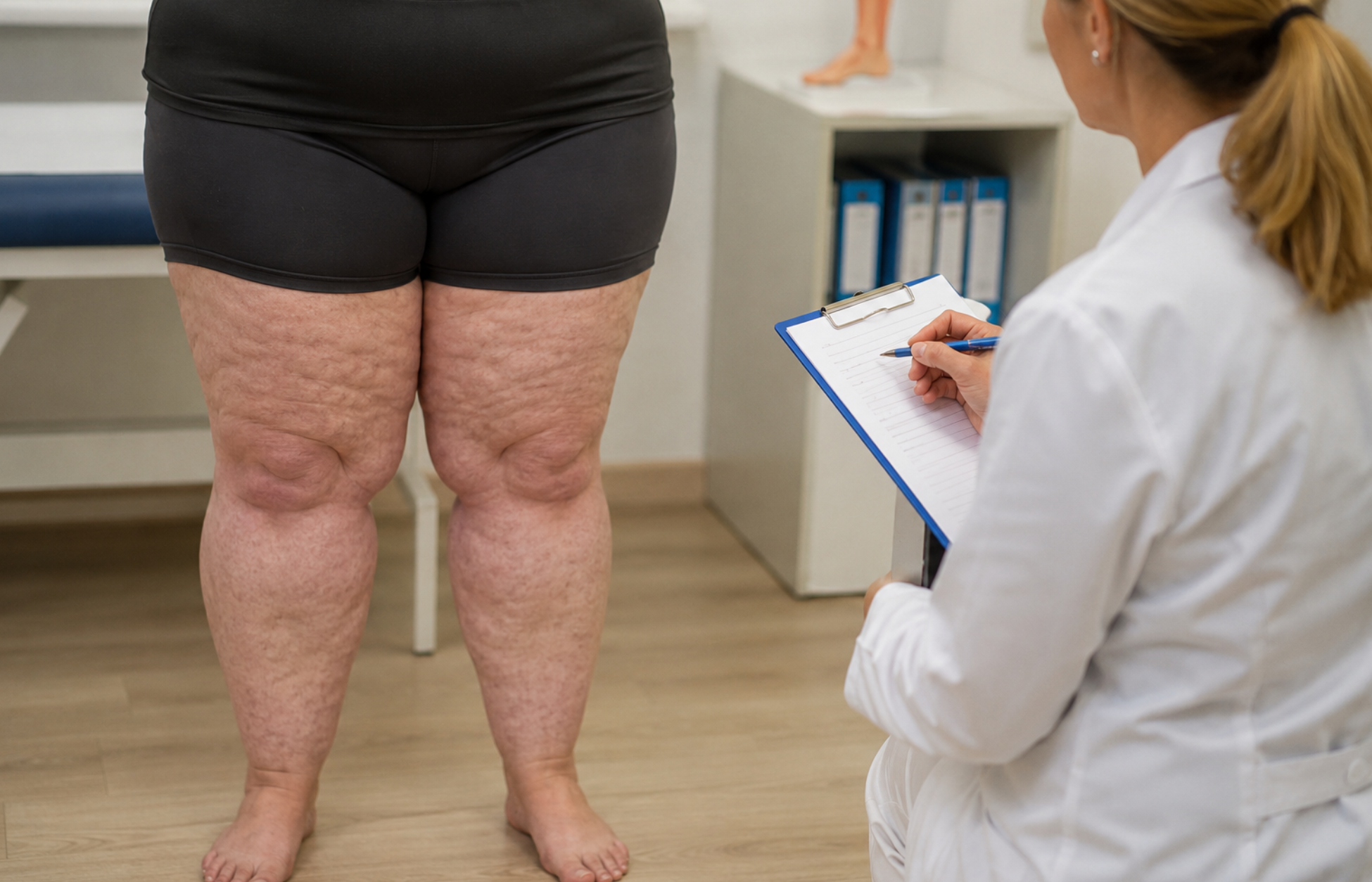
- Lipedema: Lipedema is a chronic, progressive fat-storage condition. It causes a painful, uneven buildup of fat mostly in the legs, hips, and arms, while leaving the hands and feet untouched.
Key Difference: Lipedema fat does not go away with regular diets or workouts because it isn’t caused by overeating. Instead, it’s driven by fragile blood vessels, poor fluid drainage (lymphatic dysfunction), and long-term inflammation. Currently, specialized surgery (like specialized lipedema liposuction) remains the most effective long-term treatment.
What Does Current Research Say About GLP-1s and Lipedema?
Because GLP-1s target inflammation and metabolic pathways, researchers have started looking into whether they can ease lipedema symptoms.
Here is what recent studies found:
- Pain and Swelling Reduction: A 2026 study reviewed five patients taking an older GLP-1 drug (exenatide) for blood sugar control. Surprisingly, these patients reported less pain and swelling in their limbs.
- Lowering Inflammation: Other recent research suggests that dual-action drugs like tirzepatide (Mounjaro/Zepbound) might help reduce fat tissue inflammation and scarring.
The Bottom Line on the Research
These findings are promising, but the studies were very small. GLP-1s don’t seem to break down or “melt away” stubborn lipedema fat directly. Instead, they might just help manage the inflammation and pain that come with it. Larger clinical trials are needed before doctors can say for sure.
Can You Get a GLP-1 Prescribed for Lipedema?
Technically, yes but there are important hurdles:
- Off-Label Use: Since the FDA hasn’t approved GLP-1s specifically for lipedema, taking one for this condition is considered “off-label.” Doctors are allowed to prescribe drugs off-label, but it requires careful discussion.
- Insurance Coverage: Insurance companies almost never cover GLP-1s if the prescription says “lipedema.” However, if you also qualify for weight management (having a high BMI) or have Type 2 diabetes, your plan might cover it under those diagnoses instead.
What Are the Side Effects?
If you and your doctor decide to explore a GLP-1 medication, it’s important to know what side effects to expect.
Common Side Effects
Most people experience mild to moderate stomach issues, especially when starting or raising their dose:
- Nausea, vomiting, or heartburn
- Constipation or diarrhea
- Stomach discomfort and bloating
- Fatigue or temporary hair shedding
Rare but Serious Risks
While uncommon, serious complications can happen. You should seek immediate medical care if you experience severe symptoms:
- Severe stomach pain (which could signal pancreatitis)
- Symptoms of severe dehydration or kidney problems
- Allergic reactions or swelling at the injection site
- Thyroid tumor warnings (specifically for people with a personal or family history of medullary thyroid cancer)
Conclusion
GLP-1 medications offer an exciting new path for research, but they aren’t a cure for lipedema. For now, they should be viewed as a potential tool to help manage pain and inflammation alongside established care, not a replacement for proven treatments like compression therapy or surgery.
If you are living with lipedema and curious about GLP-1s, sit down with a knowledgeable doctor to weigh the realistic benefits against the risks and costs.
References
Acuña Vengoechea, J. A. (2026). Safety and efficacy of surgical techniques in treating lipedema: Systematic review. Aesthetic Surgery Journal Open Forum, 8(1), ojag039. https://doi.org/10.1093/asjof/ojag039 Cited by: 1
Mohseni, Y. (2026). Targeting inflammation and fibrosis in lipedema: The potential role of glucagon-like peptide-1 receptor agonist therapies. Dermatologic Surgery, 52(6S), S72–S75. https://doi.org/10.1097/DSS.0000000000005172 Cited by: 2
U.S. Food and Drug Administration. (2025). FDA-approved drugs for chronic weight management. U.S. Department of Health and Human Services. https://www.fda.gov/drugs/postmarket-drug-safety-information-patients-and-providers/medications-containing-semaglutide-marketed-type-2-diabetes-or-weight-loss