Do GLP-1 Receptor Agonists Alter Personality and Emotional Function?

Demand for weight loss medications is at an all-time high. National survey data show that about half of adults want to lose weight, but many fewer are actively trying to do so. Glucagon-like peptide-1 receptor agonists, like semaglutide and tirzepatide, are key in bridging that gap. As a result, a significant number of individuals now report using these medications currently or in the past.
This quick adoption has outpaced our understanding of the neuropsychiatric effects of these drugs. Clinical excitement has mainly focused on metabolic outcomes, such as weight loss and reduced cardiovascular risk. Recently, however, patients have reported changes in mood, motivation, and emotional responses during treatment. These experiences raise an important question about whether these receptor agonists significantly change personality.
Mechanisms of Reward Pathway Modulation
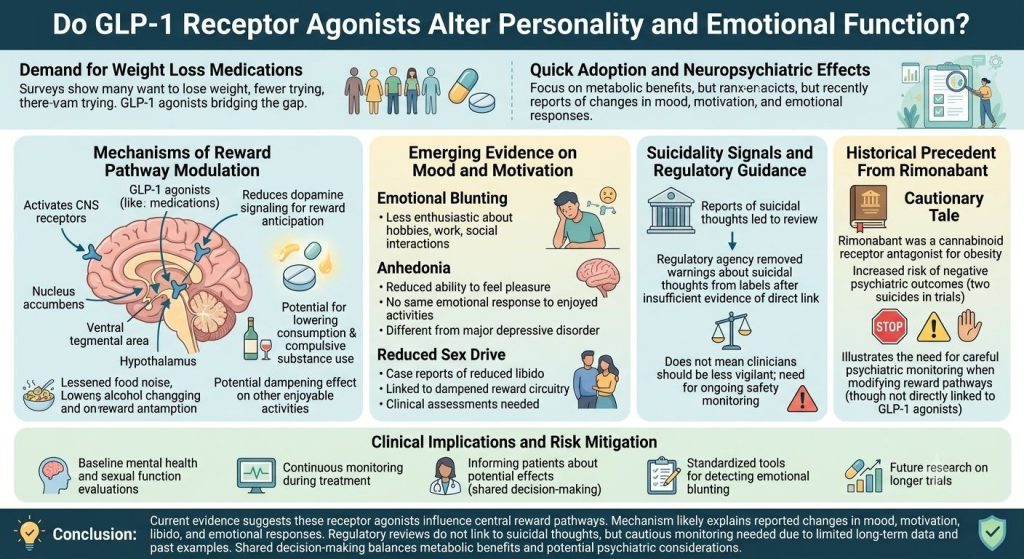
The receptors for these medications are not limited to the pancreas and gastrointestinal tract. They are found throughout the central nervous system, including areas involved in processing reward. Key regions include the ventral tegmental area, the nucleus accumbens, and the hypothalamus. Activating these central receptors seems to reduce dopamine signaling linked to reward anticipation.
This action helps explain much of the clinical benefits of this drug class beyond just suppressing appetite. Reduced reward signaling likely accounts for what patients describe as less food noise. As a result, this same pathway modulation may also affect other reward-driven behaviors. New evidence suggests these agonists could help lower alcohol consumption and compulsive substance use.
For people without a substance use disorder, this effect on the reward pathway may have different clinical implications. The dampening of the reward pathway does not only affect food or addictive substances. Consequently, patients might become less responsive to other enjoyable activities unrelated to eating. This broad effect forms the biological basis for the reported changes in mood and motivation.
Emerging Evidence on Mood and Motivation
Clinical reports note a group of symptoms that resemble emotional blunting in some patients receiving treatment. Those affected often mention feeling less enthusiastic about hobbies, work, and social interactions. Their ambition and goal-directed behavior may also decline alongside appetite suppression. Importantly, these symptoms differ from major depressive disorder since prolonged low mood is not always present.
Anhedonia, which means a reduced ability to feel pleasure, is often reported in this context. Patients commonly say that activities they once enjoyed no longer bring the same emotional response. This presentation fits with the reduced dopamine signaling mentioned earlier. Clinicians should differentiate this pattern from typical mood disorders when evaluating patients on this therapy.
Sexual function is another area impacted by reward pathway modulation. Case reports and early survey data indicate that some patients face a reduced sex drive while on treatment. This effect likely arises from the same dampened reward circuitry linked to emotional blunting. Clinicians should include sexual function assessments in routine follow-up.
Suicidality Signals and Regulatory Guidance
Rare but serious reports of suicidal thoughts among users led to a formal review by regulatory agencies. Federal bodies examined safety data and clinical trial information to evaluate any links. Following this review, the regulatory authority decided to remove warnings about suicidal thoughts from product labels. This decision reflected a lack of sufficient evidence to prove a connection between the drug use and suicidal actions.
Still, just because a causal link was not found does not mean that clinicians should be less vigilant. The absence of proven causation is different from proving safety in this case. Given that most clinical trials are of limited duration, long-term psychiatric effects remain unclear. Ongoing safety monitoring and psychiatric evaluations are necessary for new patients starting therapy.
Historical Precedent From Rimonabant
Pharmaceutical history provides a cautionary tale with the weight loss drug rimonabant. This cannabinoid receptor antagonist targeted brain pathways involved in eating behavior. While it gained approval as an additional treatment for obesity and metabolic issues, early signs of effectiveness for weight loss and metabolic improvement looked promising.
Despite these advantages, the regulatory agency ultimately turned down approval for domestic sale. The review found an increased risk of negative psychiatric outcomes among patients using it. This included two documented suicides in trial populations. The rimonabant case illustrates how modifying reward pathways can lead to unexpected psychiatric side effects.
This precedent does not link rimonabant with current options in terms of mechanisms or clinical effects. However, it highlights the need for careful psychiatric monitoring for any therapy targeting reward pathways. Such historical examples remind clinicians and regulators to be cautious rather than overly alarmed. Lessons learned should be applied to ongoing safety monitoring.
Clinical Implications and Risk Mitigation
These receptor agonists are becoming increasingly important in managing obesity and type 2 diabetes. Their metabolic and cardiovascular benefits have been well established across many large trials. However, evidence regarding mood, motivation, and libido also needs to be integrated into routine clinical care. Baseline evaluations of mental health and sexual function should accompany the start of therapy.
Continuous monitoring during treatment lets healthcare providers recognize early signs of emotional blunting or reduced drive. Patients should be informed about these potential effects before starting therapy. Therefore, shared decision-making is crucial in clinical care. Clinicians must balance the significant metabolic benefits with the possibility of underrecognized psychiatric changes.
Future research should focus on longer trials with structured psychiatric outcome measures. Additionally, standardized tools for detecting drug-related emotional blunting would enhance clinical detection. As pharmaceutical development moves forward with newer, more effective weight loss agents, the commitment to ensuring neuropsychiatric safety must continue alongside these advancements.
Conclusion
Current evidence suggests that these receptor agonists influence central reward pathways beyond just their metabolic effects. This mechanism likely explains the reported changes in mood, motivation, libido, and emotional responses. Regulatory reviews have not established a direct connection between these agents and suicidal thoughts. Nonetheless, limited long-term data and past experiences emphasize the need for ongoing psychiatric monitoring during treatment.
Clinicians should incorporate mental health and sexual function assessments into standard care practices. Patients deserve clear communication about both the significant benefits and the new psychiatric considerations. As research and medication development continue to progress, a strong commitment to safety remains vital. Careful, evidence-based prescribing will help ensure that these medications provide their significant benefits safely.
References
Meissner, W. G., Remy, P., Giordana, C., Maltête, D., Derkinderen, P., Houéto, J. L., Anheim, M., Benatru, I., Boraud, T., Brefel-Courbon, C., Carrière, N., Catala, H., Chaudhuri, K. R., Damier, P., Deverdun, J., Devos, D., Fabbri, M., Ferrier, A., Grimaldi, S., … Rascol, O. (2024). Trial of lixisenatide in early Parkinson’s disease. New England Journal of Medicine, 390(13), 1176–1185. https://doi.org/10.1056/NEJMoa2312323
Klausen, M. K., Thomsen, M., Wortwein, G., & Fink-Jensen, A. (2022). The role of glucagon-like peptide 1 (GLP-1) in addictive disorders. British Journal of Pharmacology, 179(4), 625–641. https://doi.org/10.1111/bph.15677
Health Sciences Authority and Regulatory Reviews. (2025). Sexual dysfunction associated with GLP-1 receptor agonist therapy: A systematic review. Sexual Medicine Reviews, 14(1). https://doi.org/10.1093/sexmed/qeag015