Mid-Stage Trial Shows Strong Weight Loss Results for Roche’s Obesity Drug

According to the pharmaceutical company Roche, the experimental obesity medication enicepatide reduced body weight by an average of 22.7%. In a Phase 2 clinical trial, this result happened after 48 weeks. The results establish this dual-acting therapeutic drug as a competitive player in the growing market for obesity treatments. Because of this, industry analysts predict that during the next ten years, this therapeutic market will generate more than $100 billion in sales annually.
The Phase 2 trial included 469 adults who were obese or overweight. Participants in five weekly dose cohorts as well as a placebo arm were assessed by researchers. Twenty-six percent of those on the highest dose lost at least thirty percent of their body weight overall. As a result, by week 48, almost half of the patients who were initially categorized as obese had dropped below the obesity criterion.
Enicepatide functions as a once-weekly injectable agent. The molecule simultaneously activates both glucagon-like peptide-1 and glucose-dependent insulinotropic polypeptide receptors. This dual-hormone mechanism mirrors the pharmacological approach of existing competitive therapies. For example, alternative dual-receptor treatments have demonstrated similar weight reduction profiles over longer observation periods. Meanwhile, single-receptor agonists typically produce lower mean weight loss percentages in pivotal late-stage studies.
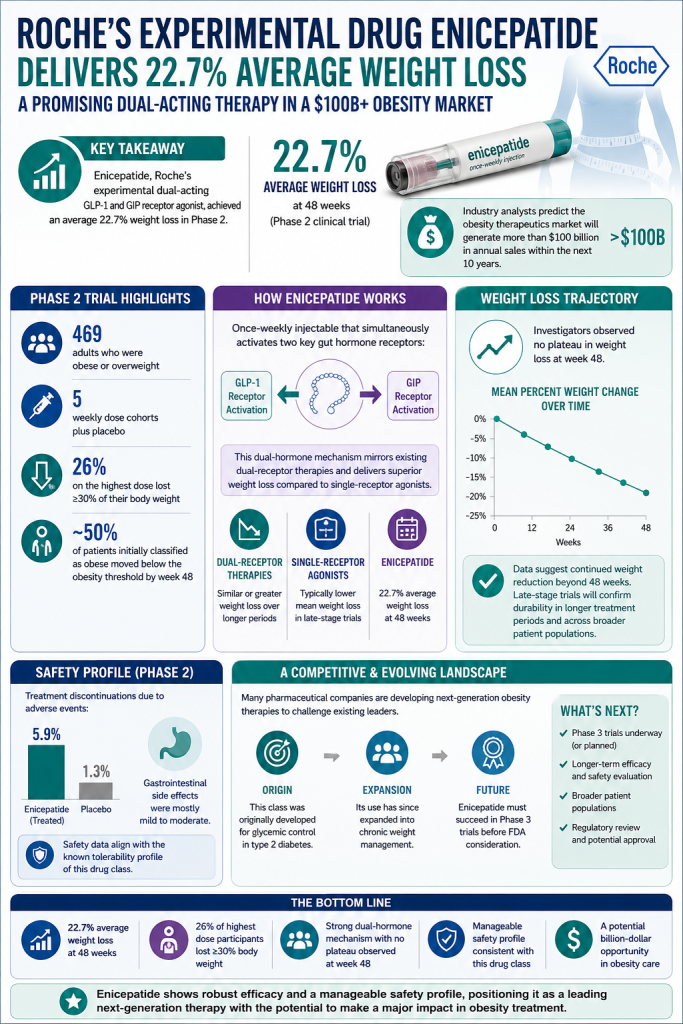
Clinical investigators observed that the weight-loss trajectory showed no sign of a plateau at week 48. The collected data suggest continued weight reduction beyond the initial study window. Accordingly, upcoming late-stage trials will determine whether that downward trajectory holds during longer treatment periods. These upcoming studies will also evaluate the therapeutic effects across broader patient populations.
The safety profile observed in the trial warrants careful monitoring as development advances. Treatment discontinuations due to adverse events occurred in 5.9 percent of treated participants. In contrast, the placebo group experienced a discontinuation rate of 1.3 percent. Gastrointestinal side effects remained predominantly mild to moderate in severity. Thus, the safety data align closely with the known tolerability profile of this drug class.
Several pharmaceutical corporations actively develop next-generation obesity treatments to challenge established industry leaders. This therapeutic class originally provided glycemic control for patients with type 2 diabetes. However, developers have since expanded its clinical application into chronic weight management. Enicepatide requires further validation in Phase 3 trials before the Food and Drug Administration can consider market authorization.