How Big Retailers Are Taking Over Weight Loss Drugs ?
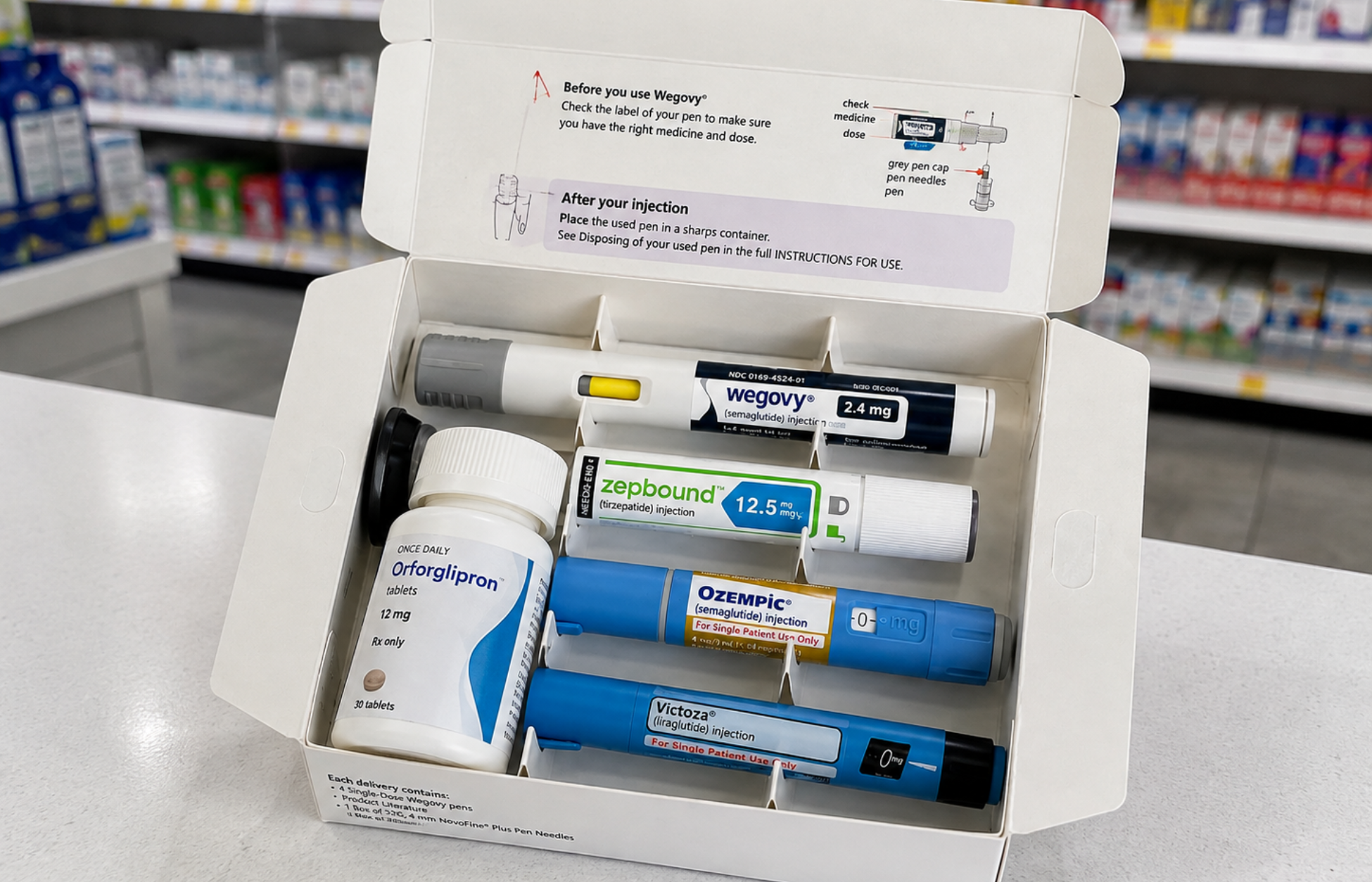
Big retail chains are racing to dominate the fast-growing weight loss medication market. At the same time, more companies are dropping these drugs from their employee health insurance plans. Because of this, patients are paying out of pocket and buying directly from major retailers, creating a massive business opportunity for retail giants.
Industry experts see this shift as a smart long-term strategy. Weight loss drugs are used over many years, which keeps customers coming back. When people drop by the store to pick up a prescription, they usually pick up groceries or household items, too. For retailers, these drugs are a reliable way to drive steady store traffic.
Retailers are using aggressive pricing to pull in buyers. Some drug makers offer discounts that increase the more often you refill your order, though many introductory deals jump to higher prices after the first month or two. Still, these promotions successfully turn new patients into long-term buyers.
Major retail chains are also finding clever ways to connect healthcare to their core services. Warehouse clubs link doctor consultations directly to paid annual memberships, supercenters bundle prescriptions with fitness apps, and online marketplaces offer pharmacy services and fast shipping through exclusive telehealth platforms.
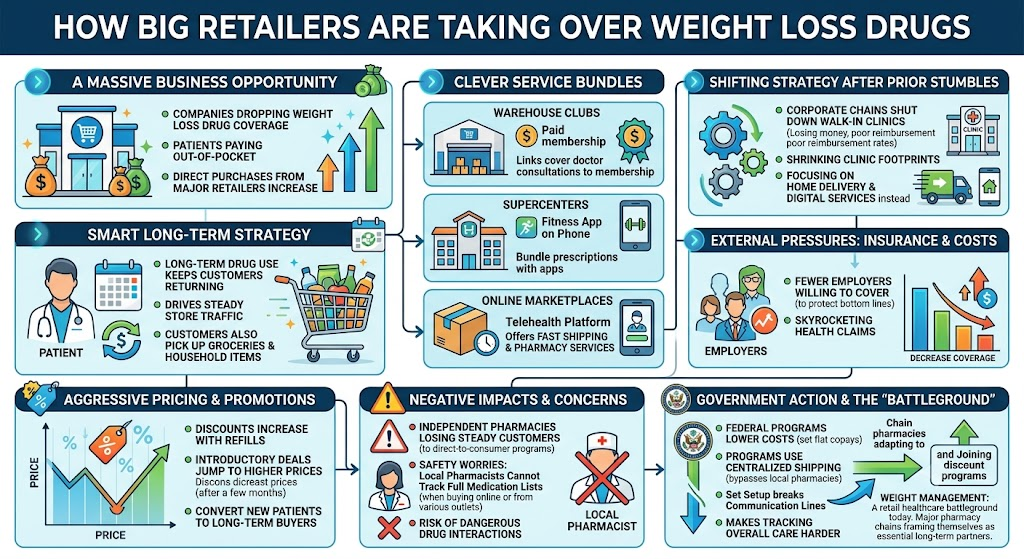
This push into healthcare comes right after several major stumbles. Over the last few years, a few massive corporate chains had to shut down their walk-in clinics because they were losing money, largely due to poor insurance reimbursement rates. As a result, many big retailers are shrinking their physical clinic footprints and focusing on home delivery and digital services instead.
Changes to company health plans are driving even more people toward retail options. Recent surveys show that fewer employers are willing to cover weight loss drugs as health claims skyrocket. To protect their bottom line, companies are simply choosing not to foot the bill for expensive, long-term treatments.
Independent pharmacies are taking a hard hit from big-box competition, losing steady customers to massive direct-to-consumer programs. Doctors and pharmacists are also worried about safety because when people buy drugs online or from different big-box outlets, local pharmacists cannot keep track of a patient’s full medication list to prevent dangerous drug interactions.
The federal government recently stepped in with specialized programs designed to lower costs, setting flat copays for certain covered therapies. However, these programs use centralized shipping centers that bypass local pharmacies entirely. Doctors report that this setup breaks communication lines, making it harder to track a patient’s overall care.
Despite these hurdles, major pharmacy chains continue to push forward, framing themselves as essential long-term partners in patient care. They are actively joining government discount programs to stay competitive, making weight management one of the biggest battlegrounds in retail healthcare today.