Unauthorized GLP-1 Compounding Raises Safety Concerns and Threatens Future Drug Innovation, PRI Brief Finds

Unauthorized Compounding Raises Safety Concerns and Threatens Innovation A new policy brief warns that unauthorized compounded weight loss medications pose serious risks to patient safety. These unregulated products also weaken the financial incentives that drive pharmaceutical innovation.
The analysis looks at how the compounding market grew after regulatory shortages that began in 2022. Although those shortages have officially ended, many compounders still distribute unauthorized formulations. These metabolic medications now reach an estimated 34 million adults, accounting for 8 to 10 percent of the adult population. Compounded medications do not have official agency approval, meaning regulators do not verify their safety or effectiveness.
As a result, patients using these products lack the safeguards of regulated manufacturing. The national regulatory agency has listed several safety concerns related to unauthorized products. These issues include improper storage conditions, dosing errors, and questionable sourcing of ingredients. Additionally, official data connects these compounded formulations to hundreds of adverse health events. At least one experimental compound is entering commercial markets without completing the formal review process.
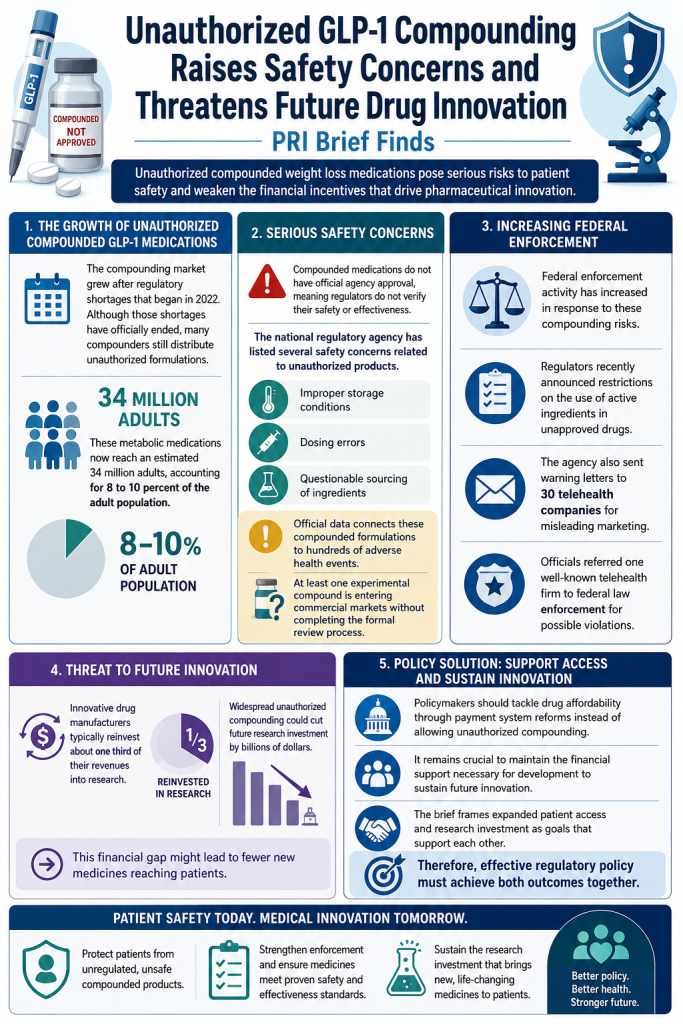
Federal enforcement activity has increased in response to these compounding risks. Regulators recently announced restrictions on the use of active ingredients in unapproved drugs. The agency also sent warning letters to 30 telehealth companies for misleading marketing. Officials referred one well-known telehealth firm to federal law enforcement for possible violations.
Beyond immediate patient safety, the brief highlights worries about long-term economic effects. Innovative drug manufacturers typically reinvest about one third of their revenues into research. Widespread unauthorized compounding could cut future research investment by billions of dollars.
This financial gap might lead to fewer new medicines reaching patients. Policymakers should tackle drug affordability through payment system reforms instead of allowing unauthorized compounding. It remains crucial to maintain the financial support necessary for development to sustain future innovation. The brief frames expanded patient access and research investment as goals that support each other. Therefore, effective regulatory policy must achieve both outcomes together.